

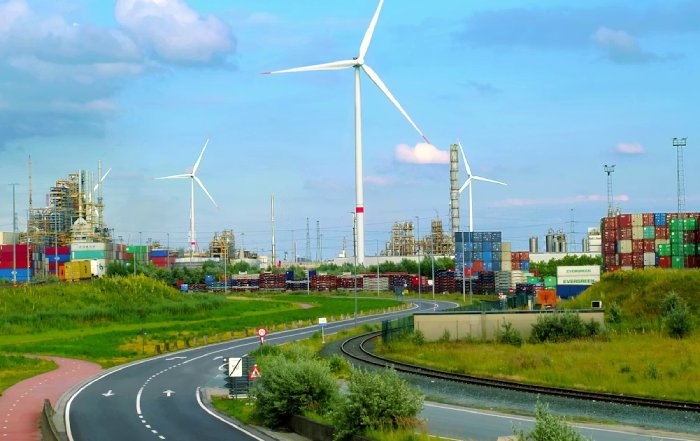
Sustainable Infrastructure as a Strategic Engine of Global Development in 2026
Why Sustainable Infrastructure Now Defines the Next Era of Growth
In 2026, sustainable infrastructure has consolidated its position as a core pillar of global economic strategy, moving well beyond the experimental or policy-driven phase that characterized the early 2020s and becoming a decisive factor in how governments, investors and corporations design their long-term strategies. Across major economies such as the United States, the United Kingdom, Germany, Canada, Australia, France, China, Japan and Singapore, as well as fast-growing markets in Africa, South America and Southeast Asia, leaders increasingly recognize that transport networks, power systems, data centers, logistics hubs and digital connectivity must be planned and operated in ways that are not only efficient and profitable, but also low-carbon, resilient and socially inclusive. For the global business community that turns to Business-Fact.com for perspectives on economic transformation and structural trends, sustainable infrastructure has become a lens through which to understand shifts in competitiveness, regulation, technology and finance across multiple sectors, from construction and energy to banking, artificial intelligence and digital services.
The momentum behind this shift is driven by a convergence of factors that have become impossible for decision-makers to ignore. Climate impacts are now material and quantifiable in every major region, whether in the form of extreme heat in Southern Europe, wildfires in North America and Australia, floods in South and Southeast Asia or droughts affecting parts of Africa and South America. Urbanization continues at scale, particularly in Asia and Africa, where cities must accommodate millions of new residents while managing congestion, pollution and resource constraints. Aging infrastructure in North America, the United Kingdom and parts of continental Europe creates both risks and opportunities as assets reach the end of their design lives and require replacement or fundamental upgrading. At the same time, technological advances in clean energy, digitalization, advanced materials and automation, together with the rapid diffusion of AI and cloud computing, are transforming what infrastructure can do and how it is financed and managed. Investors, guided by evolving disclosure rules, climate stress tests and environmental, social and governance expectations, have begun to reprice risk and reward in ways that favor resilient, low-carbon assets. Customers, employees and communities increasingly expect organizations to demonstrate credible sustainability strategies, and this expectation is reshaping corporate behavior in every major market.
In this environment, sustainable infrastructure is no longer a peripheral topic; it is central to capital allocation, employment creation, productivity growth and innovation. It shapes how boards think about long-term value and how policymakers design industrial and regional development strategies. For Business-Fact.com, which analyzes investment opportunities and risk in global markets, sustainable infrastructure has become a recurring theme that connects stock market performance, technological disruption, regulatory change and geopolitical competition in a single, coherent narrative.
Redefining Sustainable Infrastructure for a Complex Global Economy
By 2026, the definition of sustainable infrastructure has broadened significantly compared with the narrower focus on energy efficiency and emissions reduction that dominated earlier debates. Leading institutions such as the World Bank now emphasize that sustainable infrastructure must be planned, financed, built and operated in ways that support long-term economic productivity, minimize environmental degradation, and create social value, while remaining fiscally responsible and resilient to physical and transition risks. This more integrated view, outlined in the World Bank's infrastructure and sustainable development guidance, reflects the reality that infrastructure assets typically last decades and influence land use, mobility patterns, industrial activity and social cohesion over multiple generations.
In practice, this means that a new port in the Netherlands, a high-speed rail line in Spain, a smart grid in South Korea or a logistics corridor in Brazil is judged not only on construction costs and immediate economic output, but also on lifecycle emissions, resource intensity, biodiversity impact, community integration and adaptability to future technologies and climate conditions. The OECD has highlighted that such system-level thinking can unlock higher productivity and more stable returns by avoiding the lock-in of carbon-heavy, fragile or underutilized assets that may later become stranded as regulations tighten and climate impacts intensify. Business leaders and policymakers who follow global business and policy developments increasingly treat this holistic approach not as an aspirational ideal but as a practical necessity for risk management and competitive advantage.
Macroeconomic Rationale: Productivity, Growth and Stability
The macroeconomic case for sustainable infrastructure has strengthened markedly in recent years, as empirical evidence accumulates on its contribution to growth, productivity and financial stability. The International Monetary Fund (IMF) has repeatedly underscored that well-targeted public investment in resilient, low-carbon infrastructure can crowd in private capital, raise potential output and support high-quality employment, particularly in periods of economic slack or structural transition. Its work on public investment and economic growth shows that infrastructure programs, when accompanied by sound governance and project selection, can deliver lasting gains in productivity and income.
In advanced economies such as the United States, Canada, the United Kingdom, Germany and Japan, sustainable infrastructure is closely linked to efforts to modernize industrial bases, reshore or nearshore critical supply chains, and enhance competitiveness in sectors such as clean energy, advanced manufacturing and digital services. Upgrading power grids to integrate renewables, reinforcing transport networks to withstand extreme weather, and deploying high-capacity digital infrastructure are all framed as elements of long-term industrial strategy rather than isolated environmental measures. In emerging markets across Asia, Africa and South America, sustainable infrastructure is even more central to development trajectories, as countries such as India, Indonesia, Vietnam, Nigeria and Colombia seek to close infrastructure gaps while avoiding the pollution and congestion that accompanied earlier waves of industrialization in Europe and North America. The United Nations has explicitly linked sustainable infrastructure to multiple Sustainable Development Goals, and its materials on sustainable development pathways underline how energy, transport, water and digital connectivity form the backbone of inclusive growth and social progress.
For the business audience of Business-Fact.com, the macroeconomic logic is increasingly reflected in investment flows and policy choices: jurisdictions that credibly commit to sustainable, resilient infrastructure tend to attract more stable foreign direct investment, reduce vulnerability to shocks, and create more predictable environments for long-term business planning.
Climate Risk, Resilience and the Economics of Inaction
The climate dimension of infrastructure strategy has moved from theoretical models to concrete balance-sheet impacts. The Intergovernmental Panel on Climate Change (IPCC) continues to warn that without deep and sustained emissions reductions, climate impacts will become more frequent and severe, threatening economic stability, food security and political cohesion. Its reports, available through the IPCC's official portal, show that infrastructure sits at the center of both mitigation and adaptation: it is responsible for a substantial share of global emissions and is simultaneously highly exposed to climate hazards such as floods, storms, sea-level rise and heatwaves.
Recent years have seen repeated examples of climate-related disruptions to critical infrastructure: rail and road networks closed by floods in Germany and the United Kingdom, power outages linked to extreme heat in the United States, typhoons damaging ports and logistics hubs in East and Southeast Asia, and droughts affecting hydropower output in Latin America and parts of Africa. These events carry direct repair costs, lost output, supply chain interruptions and, increasingly, litigation and insurance implications. The World Economic Forum consistently ranks climate and environmental risks among the most significant global threats in its Global Risks Reports, and infrastructure vulnerability is a recurring theme in board-level risk assessments.
Sustainable infrastructure strategies respond to these challenges by embedding resilience into design standards, incorporating nature-based solutions such as wetlands restoration and urban green spaces, using advanced modeling and digital twins to anticipate hazards, and building redundancy into critical networks. The economic rationale is straightforward: the upfront cost of resilience is often far lower than the cumulative cost of repeated disruptions, asset write-downs and emergency interventions. For investors and corporate leaders who rely on Business-Fact.com for business and risk analysis, the lesson is clear: infrastructure that is not climate-resilient is increasingly seen as mispriced risk.
Financing the Transition: Banks, Capital Markets and New Instruments
Achieving the scale of sustainable infrastructure investment required to meet climate and development goals-often estimated at several trillion dollars annually through mid-century-demands a sophisticated mix of public funding, private capital, development finance and innovative instruments. Green bonds, sustainability-linked loans, transition bonds and blended finance structures have moved from niche products to mainstream tools in global capital markets. The Climate Bonds Initiative, which monitors these markets and provides taxonomies and standards, documents this evolution in its analysis of green bond and sustainable debt markets, illustrating how issuers from Europe, North America, Asia and Latin America increasingly use labeled instruments to finance renewable energy, low-carbon transport, efficient buildings and adaptation projects.
Commercial banks, particularly in the European Union, the United Kingdom, Canada and parts of Asia, are under growing regulatory and market pressure to align their portfolios with net-zero pathways. This is reshaping project finance, corporate lending and risk-weighting practices, as institutions integrate climate scenarios and environmental performance into credit decisions. Development finance institutions such as the European Investment Bank (EIB) and regional development banks in Asia, Africa and Latin America play a catalytic role by offering guarantees, concessional loans and first-loss capital to crowd in private investors for projects in emerging markets that might otherwise be considered too risky. For readers of Business-Fact.com who follow banking and financial sector developments, understanding how these institutions structure risk-sharing and de-risking mechanisms is increasingly important for evaluating opportunities in sustainable infrastructure.
Institutional investors-pension funds, insurance companies and sovereign wealth funds from countries such as Norway, the Netherlands, Canada, Singapore and Australia-are expanding their allocations to infrastructure as they seek stable, inflation-linked returns and diversification. At the same time, they face mounting expectations to demonstrate that their portfolios support the transition to a low-carbon, resilient economy. The Principles for Responsible Investment (PRI) provide practical guidance on integrating ESG considerations into infrastructure investments, and their work on responsible infrastructure investing has become a reference for asset owners and managers who must reconcile fiduciary duties with climate and sustainability commitments.
Technology, Artificial Intelligence and the Digital Fabric of Infrastructure
Technological innovation, and in particular the deployment of artificial intelligence, is reshaping both physical and digital infrastructure in ways that directly influence sustainability outcomes. Smart grids capable of managing variable renewable energy, sensor-equipped transport systems that optimize traffic flows, AI-driven predictive maintenance that reduces downtime and material waste, and digital twins that simulate performance under different climate scenarios all contribute to more efficient, resilient and lower-emission infrastructure. For the technology-focused readership of Business-Fact.com, which frequently consults its coverage of artificial intelligence in business and infrastructure, this convergence of AI and infrastructure is one of the defining innovation frontiers of the decade.
Companies in the United States, Germany, South Korea, Japan and Singapore are at the forefront of deploying AI to optimize energy dispatch, manage distributed energy resources, improve building performance and design more efficient logistics networks. The International Energy Agency (IEA) has documented how digitalization, including AI, advanced analytics and the Internet of Things, can enhance the flexibility and resilience of power systems while supporting decarbonization, and its analysis on digitalization and energy systems has influenced policy and investment decisions in numerous jurisdictions. At the same time, the rapid expansion of data centers, cloud infrastructure and high-speed connectivity raises legitimate concerns about energy consumption, land use and emissions, prompting innovation in areas such as liquid cooling, waste heat recovery, renewable-powered data campuses and circular design of hardware.
For Business-Fact.com, which tracks technology and innovation dynamics across industries, the digital layer of infrastructure is central to understanding how cities, supply chains, financial systems and public services will function in the 2030s. It also highlights the growing importance of cybersecurity, data privacy and cross-border data governance, as critical infrastructure becomes more interconnected and dependent on software, algorithms and real-time data flows.
Employment, Skills and the Evolution of the Workforce
Sustainable infrastructure investment is a powerful driver of employment and skills development, with implications for labor markets in North America, Europe, Asia, Africa and South America. Construction of renewable energy facilities, retrofitting of existing buildings, deployment of electric vehicle charging networks, modernization of ports and airports, and installation of digital monitoring and control systems all require a mix of traditional trades and new technical capabilities. The International Labour Organization (ILO) has shown that, under the right policy frameworks, a green transition can generate more jobs than it displaces, especially in sectors such as energy, manufacturing and transport, and its work on green jobs and just transition policies provides a roadmap for countries seeking to manage this shift.
For advanced economies like the United States, Canada, Germany and the United Kingdom, sustainable infrastructure is increasingly used as a tool to revitalize regions affected by deindustrialization or the decline of fossil fuel industries, offering new employment pathways in clean energy, advanced construction, environmental services and digital operations. In emerging markets across Asia and Africa, large-scale infrastructure programs can absorb growing youth populations into formal employment, with positive spillovers for social stability and domestic demand. However, the transition also creates challenges, including potential job losses in high-carbon sectors, regional disparities and the need for large-scale reskilling and upskilling. Readers who follow employment and labor market dynamics on Business-Fact.com will recognize that workforce planning, social dialogue, targeted education policies and social protection measures are critical to ensure that the benefits of sustainable infrastructure are widely shared and politically durable.
Founders, Startups and the Emerging Innovation Ecosystem
Sustainable infrastructure is no longer the exclusive domain of large utilities, engineering conglomerates and public agencies; it has become a vibrant frontier for founders and startups in North America, Europe, Asia and increasingly Africa and Latin America. Entrepreneurs are developing low-carbon construction materials, modular and off-site building systems, AI-powered design platforms, digital twins for cities and industrial zones, distributed energy platforms, and software that simplifies community engagement and project financing. Innovation hubs such as San Francisco, Boston, London, Berlin, Stockholm, Singapore, Seoul and Sydney host growing clusters of climate and infrastructure-focused startups that attract venture capital and strategic corporate investment.
For Business-Fact.com, which frequently profiles founders who shape new business models and markets, these entrepreneurs represent a crucial bridge between policy ambition and practical implementation. Their technologies enable governments and corporations to meet climate and resilience targets more efficiently, while also creating new markets in areas such as shared mobility, building performance optimization and circular construction. Academic institutions such as Massachusetts Institute of Technology (MIT) and Imperial College London support this ecosystem through research, incubators and collaboration with industry, and their initiatives on innovation and entrepreneurship illustrate how university-based ecosystems contribute to the development and scaling of sustainable infrastructure solutions.
Global Policy Architectures and Regional Dynamics
Global and regional policy frameworks have a decisive influence on the scale, direction and quality of sustainable infrastructure investment. The Paris Agreement and the evolving commitments under the UNFCCC process continue to provide a common reference point for national climate policies, while sector-specific initiatives on coal phase-out, methane reduction, clean energy deployment and adaptation finance shape infrastructure choices. In Europe, the European Union has advanced a comprehensive policy architecture through the European Green Deal, including the EU Taxonomy for Sustainable Activities and the Fit for 55 package, which influence how infrastructure projects are classified, regulated and financed. The European Commission's overview of the European Green Deal shows how climate, energy, transport, industry and finance policies are increasingly integrated.
In the United States, landmark federal legislation on infrastructure, clean energy and climate resilience has combined traditional spending on roads, bridges and broadband with substantial support for grid modernization, electric mobility, hydrogen, carbon management and industrial decarbonization, reshaping the landscape for utilities, construction firms, manufacturers and technology providers. In Asia, countries such as China, Japan and South Korea are embedding green and resilient standards into domestic infrastructure plans and overseas initiatives, including an evolving Belt and Road strategy that now references sustainability and green finance more explicitly than in its early phase. For readers of Business-Fact.com who track global news and policy shifts, these frameworks are central to understanding cross-border capital flows, supply chain reconfiguration and competitive positioning in sectors from renewable energy and batteries to rail, ports and digital networks.
In Africa, Latin America and parts of South and Southeast Asia, regional development banks and initiatives such as the African Union's infrastructure programs seek to ensure that new investments are compatible with climate resilience, biodiversity protection and social inclusion, while navigating persistent financing gaps and institutional constraints. The interplay between international climate finance, domestic reforms and private sector participation will determine whether these regions can leverage sustainable infrastructure to accelerate development without replicating the environmental and social costs experienced in earlier industrialization waves.
Capital Markets, Stock Performance and Investor Perceptions
Sustainable infrastructure has become an increasingly visible theme in global capital markets, influencing both equity and fixed-income strategies. Companies that provide renewable energy technologies, grid equipment, energy-efficient building materials, water and waste management solutions, and digital infrastructure are often perceived as structural beneficiaries of long-term policy and demand trends. Asset managers and institutional investors monitor these segments closely, and thematic indices focused on clean infrastructure and climate solutions have gained traction as tools for gaining diversified exposure. For readers who follow stock markets and sector performance on Business-Fact.com, the connection between sustainable infrastructure policies and equity valuations is now a recurring topic of analysis.
Conversely, companies and issuers heavily exposed to carbon-intensive or climate-vulnerable infrastructure without credible transition or adaptation plans face growing scrutiny from investors, lenders and regulators. Frameworks pioneered by the Task Force on Climate-related Financial Disclosures (TCFD), now embedded in regulatory regimes in multiple jurisdictions, have improved transparency on climate-related risks and opportunities, enabling markets to price these factors more systematically. The TCFD's legacy materials, accessible through its official site, continue to inform corporate reporting and investor engagement. For corporate leaders and investors who rely on Business-Fact.com for integrated business and investment insight, understanding how sustainable infrastructure influences risk premia, credit spreads and valuation multiples is now essential to long-term strategy.
Crypto, Tokenization and Emerging Financing Models
While conventional project finance, public budgets and institutional capital remain the dominant funding sources for infrastructure, digital assets and blockchain-based platforms have introduced new possibilities for structuring and distributing investment. Experiments in Europe, Asia and parts of the Middle East include tokenized infrastructure bonds, fractional ownership of renewable energy projects and blockchain-enabled tracking of carbon credits and environmental performance, all aimed at broadening the investor base, enhancing transparency and reducing transaction costs. For a segment of Business-Fact.com's readership that follows crypto and digital asset developments, these initiatives raise important questions about the future interface between digital finance and real assets.
Reputable institutions such as the Bank for International Settlements (BIS) have begun to analyze the implications of tokenization for financial stability, investor protection and market integrity, as reflected in their work on tokenization and the future of financial infrastructure. While most large-scale sustainable infrastructure projects still rely on traditional financing structures, the experimentation underway suggests that, over time, tokenization and digital platforms may play a complementary role in mobilizing capital, particularly for smaller-scale, distributed or community-based projects where conventional financing channels are less efficient.
Marketing, Stakeholder Trust and Corporate Reputation
As sustainable infrastructure becomes a central element of corporate strategy and public policy, effective communication and stakeholder engagement are critical to securing social license, investor confidence and long-term legitimacy. Companies, city authorities and national governments must demonstrate that projects are not only technically sound and financially viable, but also environmentally credible and socially inclusive. For marketing and communications professionals who turn to Business-Fact.com for insights into modern marketing and reputation management, this means that narratives around infrastructure must be grounded in verifiable data and aligned with recognized standards.
Regulators in the European Union, the United Kingdom, the United States and other jurisdictions are tightening rules on environmental claims and green marketing, increasing the risks associated with overstated or misleading sustainability narratives. Best practice now involves clear metrics, independent verification, third-party certifications and regular reporting on environmental and social outcomes. Organizations such as the Global Reporting Initiative (GRI) provide widely used frameworks for sustainability disclosure, and their guidance on infrastructure-related reporting helps companies structure credible and comparable information for investors, customers and communities. For the audience of Business-Fact.com, which spans strategy, finance, technology and communications roles, the lesson is that trust in sustainable infrastructure claims must be earned through transparency, consistency and measurable performance rather than branding alone.
A Strategic Imperative for Business and Policy Leaders in 2026
By 2026, sustainable infrastructure has clearly emerged as a strategic imperative for governments, corporations, investors and founders across all major regions, from North America and Europe to Asia, Africa and South America. It is not a peripheral compliance requirement or a niche sustainability initiative, but a foundational driver of competitiveness, innovation, risk management and long-term value creation. The readership of Business-Fact.com, with its interests spanning business strategy, stock markets, employment, technology, artificial intelligence, innovation, marketing and global policy, increasingly views sustainable infrastructure as a unifying theme that connects many of the most consequential trends of this decade.
Organizations that lead in this domain tend to combine deep technical expertise, sophisticated financial capabilities, advanced digital tools and robust governance, while maintaining a clear focus on environmental integrity and social outcomes. They recognize that infrastructure decisions made today will shape not only quarterly earnings but also the resilience and prosperity of communities and economies for decades. As Business-Fact.com continues to expand its coverage of sustainable business models and practices and innovation in global markets, sustainable infrastructure will remain at the center of its analysis, reflecting its pivotal role in driving global development in an era defined by climate urgency, technological transformation and shifting geopolitical realities.