

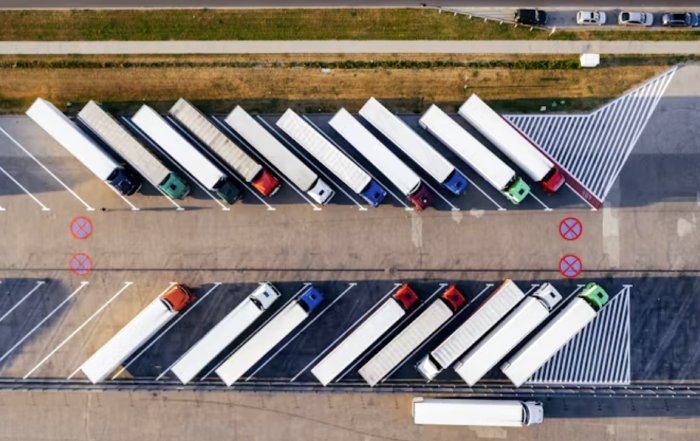
The Expansion of Green Logistics Across Global Industries
Green Logistics as a Strategic Business Imperative
Green logistics has firmly transitioned from a peripheral sustainability initiative to a central strategic pillar for leading enterprises worldwide, and Business-Fact.com has positioned itself as a key observer and interpreter of this shift for decision-makers in boardrooms from New York and London to Singapore, Berlin, and Sydney. What began more than a decade ago as a relatively narrow effort to curb transport-related emissions has evolved into a comprehensive reconfiguration of how products are sourced, manufactured, stored, moved, and returned, with environmental performance now embedded alongside cost, speed, and reliability in the core operating logic of global supply chains. Companies active in markets across North America, Europe, Asia-Pacific, Africa, and South America increasingly recognize that logistics is no longer a back-office function but a frontline arena in which climate risk, regulatory pressure, technological innovation, and stakeholder expectations intersect, shaping both competitive positioning and long-term enterprise value.
Customers in the United States, the United Kingdom, Germany, Canada, Australia, France, the Netherlands, and other advanced economies now expect lower-carbon products and transparent logistics footprints as a basic component of brand trust, while regulators and investors demand measurable progress toward net-zero commitments and credible transition plans. At the same time, rapid advances in digital technology, automation, and artificial intelligence are enabling a new generation of optimization, predictive planning, and real-time emissions monitoring that was technically and economically unfeasible only a few years ago. Organizations that integrate these capabilities into coherent business strategies are discovering that green logistics can unlock cost efficiencies, reduce risk, and open access to new pools of capital, rather than functioning merely as a compliance cost. For the global business community that follows Business-Fact.com, green logistics is now understood as a defining lens through which operational excellence, resilience, and long-term value creation must be evaluated.
Defining Green Logistics in the 2026 Business Context
In the contemporary context, green logistics refers to the systematic integration of environmental and climate objectives into every dimension of logistics and supply chain management, including transportation, warehousing, inventory management, packaging, and reverse logistics, with the dual aim of minimizing ecological impact and maintaining or improving service quality and profitability. It extends well beyond carbon mitigation to encompass air quality, noise reduction, land use, resource efficiency, biodiversity considerations, and circularity, aligning closely with the broader sustainability agenda articulated in the United Nations Sustainable Development Goals. For executives, this means that logistics decisions are now assessed not only on their contribution to margin and customer satisfaction but also on their role in achieving science-based climate targets, enhancing resilience, and strengthening stakeholder trust.
Technically, green logistics in 2026 is anchored in rigorous quantification, with companies increasingly relying on lifecycle assessment methodologies, granular emissions accounting aligned with the GHG Protocol scopes, and digital twins of supply chains that simulate environmental and financial trade-offs across different routing, mode, and inventory strategies. Connected fleets, sensor-equipped warehouses, and IoT-enabled infrastructure continuously feed data into enterprise systems, allowing organizations to track fuel consumption, electricity use, refrigeration efficiency, and waste generation in near real time. This data is integrated into both operational dashboards and corporate reporting frameworks, including emerging global sustainability standards, enabling companies to calculate the marginal abatement cost of interventions such as mode shifts, network redesign, or electrification. In practice, this analytical sophistication reinforces the business case that Business-Fact.com consistently highlights in its coverage of technology-driven transformation, demonstrating that environmental performance and financial performance can be mutually reinforcing when managed strategically.
Regulatory Drivers and Global Policy Momentum
The acceleration of green logistics is inseparable from the evolving regulatory environment, as governments and supranational bodies deploy policy levers to steer corporate behavior and capital flows toward low-carbon infrastructure and operations. In the European Union, the European Commission continues to operationalize the European Green Deal, with the Fit for 55 package, carbon pricing extensions, vehicle emissions standards, and maritime and aviation measures collectively reshaping the economics of logistics-intensive sectors. Companies operating in Germany, France, Italy, Spain, the Netherlands, Sweden, Denmark, and other member states are re-evaluating fleet renewal cycles, fuel choices, and intermodal strategies, while also reassessing network design to account for low-emission zones, rail capacity, and port decarbonization initiatives. These policy shifts reverberate far beyond Europe's borders, given the region's central role in global trade flows and standard-setting.
In the United States, regulatory momentum combines federal initiatives with powerful state and regional actions. Incentives embedded in the Inflation Reduction Act for clean energy, charging infrastructure, and low-emission vehicles interact with state-level regulations in California and the Northeast that target heavy-duty vehicle emissions, port pollution, and urban air quality. Businesses active across North America are responding by scaling investments in electric trucks, renewable fuels, on-site renewable energy at distribution centers, and collaborative projects with port authorities that are developing green shipping corridors and shore power requirements. In Asia, policy approaches are diverse but increasingly ambitious: Japan, South Korea, and Singapore are using industrial policy, subsidies, and innovation grants to promote low-carbon logistics technologies, while China's industrial strategy continues to accelerate adoption of new energy vehicles and electrified freight corridors. For global enterprises, this patchwork of regulations underscores the need for region-tailored approaches nested within a consistent global framework, a theme that is central to effective global business planning and risk management.
Technological Innovation as a Catalyst for Sustainable Logistics
The rapid expansion of green logistics would not be possible without the converging waves of digital and physical innovation transforming supply chains. Advanced analytics, machine learning, and optimization algorithms are now routinely embedded in route planning, load consolidation, inventory positioning, and demand forecasting, enabling companies to reduce empty miles, improve asset utilization, and cut fuel consumption while maintaining high service levels. Organizations that closely follow developments in artificial intelligence for business operations recognize that these tools not only deliver efficiency gains but also generate the high-resolution data required to calculate emissions, test decarbonization scenarios, and demonstrate progress to regulators, customers, and investors.
On the hardware front, electrification and alternative propulsion systems are reshaping freight across road, maritime, rail, and air segments. The declining cost of batteries, combined with supportive policy incentives and improvements in charging infrastructure, is driving large-scale deployment of electric delivery vans, light trucks, and increasingly medium-duty vehicles in dense urban and suburban areas from Los Angeles and Chicago to London, Paris, Toronto, Sydney, and Tokyo. Pilot projects for hydrogen fuel cell trucks and bio-LNG-powered long-haul vehicles are expanding along major corridors in Europe and Asia, particularly in Germany, the Netherlands, South Korea, and Japan, where governments and industry are co-investing in refueling networks. In maritime shipping, carriers such as Maersk are moving beyond pilots to significant fleet commitments for green methanol vessels, while ports in Rotterdam, Hamburg, Singapore, Los Angeles, and Shanghai are experimenting with onshore power, alternative fuels, and digitalized berth management. These developments illustrate how innovation and logistics-focused investment are converging to create new sources of competitive advantage for early adopters that can scale low-carbon technologies across complex networks.
Digitalization and Data Transparency as Enablers
Digitalization is the connective tissue that allows green logistics to scale across multi-tiered, multi-regional supply chains. Cloud-based platforms, standardized data formats, and robust application programming interfaces enable shippers, carriers, logistics service providers, and customers to share real-time information on shipments, capacity, and emissions, supporting dynamic decision-making that optimizes environmental and economic outcomes simultaneously. Transport management systems integrated with telematics, warehouse management systems linked to energy and building management platforms, and procurement systems that incorporate supplier emissions profiles are increasingly standard in sophisticated logistics organizations, creating an ecosystem in which transparency and accountability are gradually becoming the norm rather than the exception.
At the same time, global frameworks for sustainability reporting are tightening expectations around the quality, comparability, and assurance of logistics-related emissions data. The International Sustainability Standards Board and the Task Force on Climate-related Financial Disclosures have helped define best practice in climate reporting; organizations seeking to stay ahead of investor and regulatory scrutiny monitor evolving climate disclosure expectations and adapt their internal systems accordingly. For readers of Business-Fact.com, the critical insight is that logistics data now sits at the intersection of operations, finance, and governance: it informs capital allocation, supports scenario analysis for climate risk, and underpins the credibility of corporate net-zero strategies. As a result, chief financial officers, chief sustainability officers, and chief supply chain officers are increasingly collaborating to ensure that digital infrastructure and data governance are robust enough to support the next phase of green logistics expansion.
Sectoral Adoption Across Manufacturing, Retail, and E-Commerce
The adoption of green logistics practices varies significantly across sectors, reflecting differences in supply chain structures, customer expectations, and regulatory exposure, yet a common pattern of strategic integration is emerging. In manufacturing-intensive economies such as Germany, Japan, South Korea, China, and Italy, industrial companies are reconfiguring inbound and outbound logistics networks to favor rail and inland waterways where feasible, redesigning packaging to reduce weight and material use, and partnering with third-party logistics providers to develop shared low-carbon distribution platforms. Many of these initiatives are closely aligned with broader decarbonization roadmaps for plants and product portfolios, as companies seek to address the often-dominant share of logistics in scope 3 emissions inventories. Organizations draw on guidance from the Science Based Targets initiative, which offers sector-specific decarbonization pathways, to align logistics decisions with credible long-term climate trajectories.
In retail and e-commerce, where customer-facing delivery experiences are central to brand value, companies in the United States, the United Kingdom, Canada, Australia, and across the European Union are experimenting with a wide range of green logistics innovations. These include incentivizing slower, lower-emission delivery options at checkout, consolidating shipments to reduce last-mile trips, deploying micro-fulfilment centers closer to demand, and expanding the use of cargo bikes, electric vans, and autonomous delivery robots in dense urban areas. Major platforms and logistics providers are investing heavily in electric last-mile fleets, urban consolidation hubs, and returns optimization technologies, recognizing that the environmental footprint of rapid delivery and high return rates is under growing scrutiny from both regulators and consumers. For business leaders tracking market trends and innovation, these developments demonstrate how logistics can evolve from a cost center into a differentiating factor in customer experience, brand positioning, and cost resilience in an era of volatile fuel and carbon prices.
Regional Perspectives: North America, Europe, and Asia-Pacific
Regional infrastructure, energy systems, and regulatory frameworks shape the pace and character of green logistics adoption, requiring companies to tailor global strategies to local realities. In North America, vast distances and a heavy reliance on trucking create both structural challenges and opportunities for innovation, as companies explore combinations of electrification, renewable diesel, improved rail connectivity, and optimized intermodal solutions linking road, rail, and ports. The U.S. Department of Transportation provides detailed guidance on sustainable freight strategies, which many shippers and logistics providers use as a reference when planning fleet renewal and infrastructure investments. Canada and Mexico are increasingly aligning regulations and incentives with U.S. developments, particularly along key cross-border trade corridors, reinforcing the importance of regional coordination for effective logistics decarbonization.
Europe benefits from relatively dense infrastructure, strong rail networks, and a more cohesive regulatory framework, which collectively support faster deployment of low-carbon logistics solutions. Germany, the Netherlands, Switzerland, and the Nordic countries are at the forefront of intermodal freight, green port initiatives, and zero-emission urban logistics zones, while the United Kingdom, France, Spain, and Italy are advancing policies on urban air quality, low-emission zones, and vehicle standards that indirectly accelerate the transition to cleaner fleets and smarter logistics. In Asia-Pacific, heterogeneity is the defining feature: advanced economies such as Japan, South Korea, Singapore, and Australia are pioneering smart ports, digital freight platforms, and integrated logistics hubs, while emerging economies in Southeast Asia, India, and parts of China are grappling with rapid demand growth, infrastructure bottlenecks, and the need to leapfrog to more sustainable models. For executives evaluating cross-border investment opportunities, understanding these regional nuances is critical to designing scalable yet locally relevant green logistics strategies that can withstand regulatory change and physical climate risks.
Financial, Risk, and Stock Market Implications
The financial and capital-market implications of green logistics have become more pronounced as investors sharpen their focus on climate-related risks and opportunities. Asset managers, pension funds, and sovereign wealth funds are integrating environmental, social, and governance criteria into portfolio construction and stewardship activities, with logistics performance now recognized as a critical component of corporate climate strategies. Index providers and research organizations such as MSCI and S&P Global have documented how companies with credible transition plans, efficient low-carbon logistics operations, and transparent reporting often benefit from lower financing costs, stronger analyst coverage, and inclusion in sustainability-oriented indices. Investors seeking to deepen their understanding of these trends increasingly explore resources on ESG integration in capital markets to refine their engagement with logistics-intensive sectors.
From a risk perspective, physical climate impacts such as extreme weather events, flooding, wildfires, and heat stress are already disrupting transport networks, ports, and warehousing in regions ranging from the United States and Canada to Europe, South Asia, and Southern Africa. Green logistics strategies that emphasize route diversification, modal flexibility, energy-efficient infrastructure, and climate-resilient facility design can mitigate both acute and chronic risks while simultaneously contributing to emissions reduction objectives. For readers who monitor stock market dynamics and corporate performance, it is increasingly clear that logistics resilience and sustainability are deeply intertwined with long-term value creation, influencing not only operational continuity but also brand reputation, regulatory exposure, and access to capital.
Labor, Skills, and Employment in a Greener Supply Chain
The restructuring of logistics around environmental objectives is reshaping labor markets and skills requirements across advanced and emerging economies, with significant implications for workers, unions, and policymakers. As companies deploy electric vehicles, automated storage and retrieval systems, robotics, and advanced digital platforms, they require employees who can manage data-rich environments, interpret analytics, maintain complex equipment, and integrate sustainability considerations into day-to-day operational decisions. This shift is prompting collaborations between businesses, vocational institutions, universities, and public agencies to develop training pathways, apprenticeships, and certification programs focused on electric vehicle maintenance, energy-efficient warehouse management, sustainable logistics planning, and digital supply chain management. For leaders interested in workforce implications, Business-Fact.com regularly analyzes employment and skills trends in logistics and adjacent sectors.
Green logistics initiatives can also improve working conditions by reducing exposure to diesel exhaust, noise, and heavy manual handling, particularly in ports, distribution centers, and last-mile delivery operations. Worker organizations in Europe, North America, and parts of Asia are increasingly engaging with employers and governments to ensure that the transition to low-carbon logistics is socially just, with mechanisms to support reskilling, redeployment, and fair distribution of productivity gains. The International Labour Organization has highlighted these issues through its work on green jobs and the just transition, emphasizing that technological and infrastructural investments must be matched by investments in human capital and social dialogue. For the audience of Business-Fact.com, this underscores that the success of green logistics depends not only on engineering and finance but also on inclusive workforce strategies that maintain social license and operational stability.
Startups, Founders, and the Innovation Ecosystem
The expansion of green logistics has opened significant space for entrepreneurial activity, with founders across the United States, the United Kingdom, Germany, France, the Netherlands, Sweden, Singapore, Australia, and beyond building companies that address specific pain points in sustainable transport, digital optimization, and circular supply chains. New ventures are developing platforms that match freight loads with available capacity to reduce empty runs, software that provides real-time emissions tracking and route optimization, modular and reusable packaging systems that lower materials usage and logistics costs, and marketplace solutions that enable collaborative warehousing and shared distribution networks. Many of these startups attract venture capital and corporate investment from established logistics providers, retailers, and manufacturers seeking access to innovative technologies and agile experimentation. Readers eager to explore the entrepreneurial dimension of this transformation can find further insights on founders and emerging business models.
Collaboration between startups and incumbents is becoming a hallmark of the green logistics ecosystem. Technology firms partner with transport operators, port authorities, and infrastructure owners to pilot electric charging networks, hydrogen refueling corridors, and digital freight exchanges, where network effects and interoperability are crucial to commercial viability. The World Economic Forum has documented many of these partnerships in its work on sustainable supply chains and mobility, highlighting how public-private collaboration and cross-industry consortia are accelerating the diffusion of best practices. For the global business community that relies on Business-Fact.com for strategic intelligence, these developments underscore that innovation in green logistics is not confined to any single segment but is emerging from a complex, interconnected ecosystem of large enterprises, startups, investors, and public institutions.
Marketing, Brand Positioning, and Customer Expectations
Green logistics has become a prominent lever in marketing and brand strategy, particularly in markets where environmental awareness and regulatory scrutiny are high. Companies in consumer goods, fashion, electronics, food, and other sectors are increasingly foregrounding their sustainable logistics practices in customer communications, highlighting reduced delivery emissions, eco-efficient packaging, and transparent supply chains as part of their value proposition. In the United States, the United Kingdom, Germany, the Nordic countries, and parts of Asia-Pacific, these messages resonate strongly with consumer segments that view climate performance as an integral aspect of brand identity and are willing to reward companies that demonstrate authentic progress. Executives looking to align logistics initiatives with customer-facing narratives can explore perspectives on sustainable marketing approaches and their implications for brand equity.
However, the growing prominence of green logistics in marketing increases the risk of perceived or actual greenwashing, prompting regulators, consumer protection agencies, and civil society organizations to demand more rigorous substantiation of environmental claims. Authorities in the European Union, the United States, the United Kingdom, and other jurisdictions are issuing guidance and enforcement actions related to misleading sustainability statements, requiring companies to back logistics-related claims with credible data, transparent methodologies, and, in some cases, third-party verification. Organizations such as the OECD provide guidance on responsible business conduct and transparency, helping companies structure internal controls and governance mechanisms that reduce reputational risk. For business leaders, the implication is clear: logistics-related sustainability claims must be grounded in verifiable operational changes and robust measurement systems to support long-term trust and differentiation.
The Intersection of Green Logistics, Finance, and Crypto Innovation
As capital markets evolve to support the low-carbon transition, new financial instruments and digital technologies are emerging that directly influence the economics of green logistics. Banks and institutional investors in financial centers such as New York, London, Frankfurt, Singapore, Hong Kong, and Zurich are structuring sustainability-linked loans and green bonds that tie cost of capital to measurable improvements in logistics emissions, energy efficiency, and fleet decarbonization. Development finance institutions, including the International Finance Corporation, are deploying blended finance structures to de-risk investments in sustainable logistics infrastructure in emerging markets, supporting projects such as green ports, rail upgrades, and urban consolidation centers. Executives exploring these opportunities often review analyses of sustainable finance trends to understand how financing structures can accelerate logistics transformation while managing risk.
In parallel, the intersection of logistics and digital assets is gradually taking shape, as blockchain-based platforms experiment with applications in emissions tracking, carbon credit management, and supply chain transparency. Distributed ledger technologies are being tested to verify low-carbon fuel usage, document multimodal transport chains, and support automated settlement in complex international logistics transactions. While the broader crypto ecosystem continues to evolve under intensifying regulatory oversight, certain use cases related to provenance, trade finance, and sustainability reporting show potential to enhance trust, reduce administrative friction, and improve data integrity in global logistics networks. For readers of Business-Fact.com, the strategic question is how these digital innovations can be integrated into existing financial and operational systems in ways that deliver tangible efficiency gains and support credible decarbonization, rather than adding complexity without clear value.
Future Outlook: Strategic Priorities for Business Leaders
Looking toward the late 2020s, the expansion of green logistics across global industries appears set to intensify, driven by the reinforcing dynamics of regulation, technology, customer expectations, and capital-market pressures. For business leaders, the central challenge is to move beyond isolated pilot projects and incremental improvements toward integrated strategies that embed green logistics into core business models, governance structures, and performance metrics. This involves cross-functional collaboration between operations, finance, technology, sustainability, and marketing teams, as well as proactive engagement with external stakeholders, including suppliers, customers, regulators, investors, and local communities. Executives who rely on Business-Fact.com for strategic insight recognize that green logistics is not a passing trend but a structural redefinition of how global commerce operates.
Strategic priorities for the coming years include accelerating the deployment of low- and zero-emission vehicles and vessels, deepening digital integration across supply chains, investing in green infrastructure and renewable energy for logistics assets, enhancing resilience to physical climate impacts, and building organizational capabilities to manage complex, data-rich logistics systems. Companies will also need to participate in shaping the standards, regulations, and market mechanisms that govern logistics decarbonization, working through industry associations and public-private platforms to ensure that policies are both ambitious and practical. Organizations such as the International Transport Forum provide influential analysis on transport decarbonization pathways, which can inform corporate scenario planning and stakeholder engagement. For businesses across regions from North America and Europe to Asia, Africa, and South America, those that align their logistics strategies with the emerging low-carbon economy-while maintaining a clear focus on operational excellence, innovation, and transparency-will be best positioned to create enduring value, manage risk, and build the trust that underpins long-term success in an increasingly interconnected and climate-conscious global marketplace.
For readers and partners of Business-Fact.com, the evolution of green logistics is more than a topic of interest; it is a lens through which to interpret shifts in banking, global economic structures, technological disruption, and the broader business landscape. As 2026 unfolds, the platform will continue to analyze how leading organizations convert green logistics from a compliance obligation into a source of innovation, resilience, and competitive strength across the world's most dynamic markets.