

Advanced Robotics and Industrial Competitiveness in 2026
From Niche Technology to Strategic Foundation
By 2026, advanced robotics has moved decisively from the margins of engineering departments into the core of boardroom strategy, national industrial policy, and institutional investment mandates. For the global readership of business-fact.com, spanning the United States, Europe, Asia-Pacific, Africa, and the Americas, robotics is no longer a speculative theme or a distant promise; it has become a practical and measurable driver of competitiveness in manufacturing, logistics, healthcare, energy, infrastructure, and increasingly in services and finance. Executives who once treated automation as a cost-optimization lever now view advanced robotics as an essential foundation for resilient supply chains, regionalized production, sustainability performance, and innovation-led growth, aligning closely with the technology and business strategy insights that define this platform.
The acceleration of robotics adoption in the early and mid-2020s was shaped by a combination of structural and cyclical forces. Persistent supply chain fragility following the COVID-19 pandemic, escalating geopolitical tensions, and export controls affecting semiconductors and critical components pushed companies to reassess long, globally dispersed production networks. At the same time, demographic aging in key economies such as Japan, Germany, Italy, and South Korea, together with tight labor markets in the United States, United Kingdom, Canada, Australia, and parts of Asia, increased wage pressures and exposed structural skills gaps. These dynamics encouraged firms to pursue reshoring and nearshoring strategies, with robotics and digital automation serving as the enabling technologies that made higher-cost locations economically viable again. As organizations revisited their technology roadmaps, they discovered that robotics was not merely a tool for labor substitution, but a catalyst for higher flexibility, traceability, and quality, capabilities that are critical in regulated sectors and in industries under pressure to decarbonize and report against increasingly demanding ESG standards.
The technology stack underpinning this transformation has matured rapidly. Breakthroughs in machine vision, edge computing, 5G connectivity, and cloud robotics-combined with more accessible programming environments and low-code tools-have lowered barriers to entry for mid-sized manufacturers, logistics providers, and even service businesses. Where large capital budgets and specialized engineering teams were once prerequisites, collaborative robots and autonomous mobile robots can now be deployed within months, integrated into existing ERP and MES systems, and scaled across multi-country operations. This shift has turned robotics into a practical instrument of enterprise transformation, well aligned with the themes of innovation, risk management, and capital efficiency that business-fact.com examines across its global coverage.
What "Advanced Robotics" Means in the 2026 Industrial Landscape
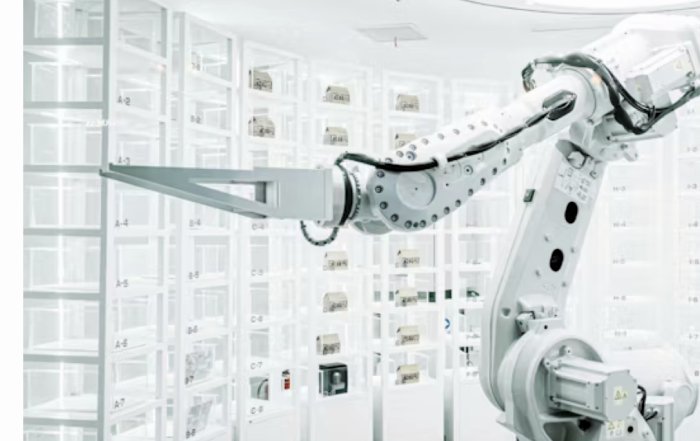
In the industrial context of 2026, advanced robotics encompasses a broad spectrum of physical and software systems that work together in tightly integrated cyber-physical environments. Traditional fixed industrial arms remain central in automotive, electronics, metals, and chemicals, but they are now complemented by collaborative robots that safely share workspaces with humans, autonomous mobile robots that navigate complex warehouses and factories, robotic process automation that handles structured back-office workflows, and increasingly capable humanoid and bipedal platforms designed to operate in spaces built for human workers. These machines are coordinated by software layers powered by artificial intelligence, including computer vision, reinforcement learning, and large-scale data analytics, enabling robots to adapt to variability, optimize their own workflows, and coordinate with fleets of other machines and digital systems.
The International Federation of Robotics (IFR) continues to provide one of the most authoritative statistical views of global robot deployment, tracking record installations in China, the United States, Germany, South Korea, and Japan, as well as growing adoption in Mexico, Brazil, Thailand, Vietnam, and parts of Eastern Europe. Decision-makers can explore IFR's latest global data and trend analysis by visiting the IFR's official site, which complements the macro-economic and sectoral perspectives that business-fact.com offers through its economy coverage. In parallel, the World Economic Forum continues to frame advanced robotics as a core pillar of the Fourth Industrial Revolution, emphasizing its role in smart factories, cyber-physical systems, and data-driven value chains that enable new levels of agility and resilience; executives seeking a strategic overview can review WEF's work on advanced manufacturing and automation by visiting its Fourth Industrial Revolution resources.
What distinguishes advanced robotics in 2026 is the depth of integration into end-to-end digital ecosystems rather than the mechanical sophistication of individual machines. Robots increasingly draw on real-time data from sensors, industrial IoT platforms, ERP and warehouse management systems, supplier portals, and customer demand signals. They are orchestrated through cloud-based control platforms, synchronized with digital twins that simulate production environments, and monitored using predictive analytics that anticipate failures and optimize throughput. This fusion of hardware, AI, and data infrastructure is central to the experience-based, authoritative analysis that business-fact.com provides, because it directly shapes capital allocation, risk management, and innovation strategy across industries and regions.
Productivity, Quality, and the New Economics of Automation
The fundamental business rationale for robotics adoption continues to center on productivity and quality, but the economics in 2026 are more nuanced and more favorable than in previous cycles. Advanced robots now operate with higher precision, repeatability, and uptime, often exceeding human performance in tasks that demand consistent force, micron-level accuracy, or long-duration endurance. In automotive and electronics manufacturing, robots have long been indispensable for welding, painting, and high-speed assembly; however, improvements in vision, force sensing, and gripper technology now enable robots to handle delicate tasks such as battery cell assembly, semiconductor packaging, and pharmaceutical handling, where contamination risk and regulatory scrutiny are high.
For executives and investors monitoring global economic performance, the link between robotics and productivity is particularly salient in the context of persistent productivity slowdowns across many advanced economies. The OECD has documented these trends and highlighted automation and digitalization as key levers for reversing them, especially in aging societies where labor force growth is constrained. Leaders seeking insight into how automation contributes to macro-level productivity and competitiveness can review the OECD's analysis by visiting its official portal. At the plant level, robots are increasingly deployed not only to lower labor costs, but to stabilize output, reduce variability, and enable shorter production runs, which is crucial for sectors facing demand volatility and mass customization requirements, such as consumer electronics, automotive components, and advanced materials.
Quality and compliance are equally important dimensions of the robotics value proposition. In aerospace, medical devices, biopharmaceuticals, and high-end electronics, regulatory regimes in the United States, European Union, Japan, and China impose stringent standards on traceability, process control, and documentation. Robots equipped with high-resolution cameras, non-destructive testing tools, and AI-based anomaly detection can inspect components and assemblies with a consistency that is difficult to match with human inspection alone. Integration with statistical process control systems and digital quality records allows companies to detect deviations early, adjust parameters in real time, and demonstrate compliance to regulators and customers with detailed digital audit trails. For organizations that depend on reputation and trustworthiness in global supply chains, this combination of robotic precision and data-rich traceability is becoming a decisive competitive differentiator.
Labor Markets, Skills, and the Human-Robot Relationship
The expansion of robotics has inevitably intensified debates about employment, skills, and social impact-areas that are central to business-fact.com and its dedicated focus on employment and labor market dynamics. Early narratives that portrayed robots as straightforward substitutes for human labor have given way to a more nuanced reality. Advanced robotics has displaced certain categories of routine, manual, and repetitive work, particularly in high-volume manufacturing, warehousing, and basic back-office operations. At the same time, it has created substantial demand for new roles in robotics systems integration, AI and data engineering, predictive maintenance, safety engineering, user-experience design for human-machine interfaces, and cross-functional roles that bridge operations, IT, and analytics.
The International Labour Organization (ILO) has emphasized that the net employment impact of automation is heavily shaped by policy choices, skills systems, and the design of corporate transition strategies. Countries and companies that invest in vocational training, lifelong learning, and reskilling programs are better positioned to translate automation into higher productivity and better jobs, rather than displacement and social tension. Leaders can explore the ILO's research on automation, decent work, and inclusive transitions by visiting its official site, which provides a policy and social framework that complements the business-oriented analysis on this platform. In practice, responsible organizations are moving away from viewing robotics purely as a cost-cutting mechanism and toward a model of human-robot collaboration that emphasizes safety, ergonomics, and progression into higher-value tasks.
Collaborative robots, in particular, have become emblematic of this hybrid model. Designed to work safely alongside humans, cobots handle repetitive, heavy, or ergonomically challenging tasks, while human workers focus on complex assembly, quality judgment, exception handling, and continuous improvement. This model is especially relevant for small and medium-sized enterprises in Germany, Italy, the Nordics, United Kingdom, United States, Canada, Japan, Singapore, and South Korea, where full "lights-out" automation is neither economically nor operationally optimal. For leaders designing future workplaces, business-fact.com continues to provide in-depth coverage of innovation in work design and organizational models, highlighting case examples where robotics has been integrated with employee engagement, transparent communication, and structured reskilling pathways.
Regional Patterns and the Global Race for Advantage
Industrial competitiveness in 2026 is shaped by pronounced regional differences in robotics adoption, ecosystem maturity, and regulatory frameworks. East Asia remains a powerhouse, with China, Japan, and South Korea continuing to invest heavily in robotics as part of long-term industrial strategies. China's evolving industrial policies, following on from "Made in China 2025" and subsequent initiatives, have accelerated robot deployment in automotive, electronics, battery manufacturing, and renewable energy equipment, while also nurturing domestic robot manufacturers that increasingly compete with established global players. Japan and South Korea leverage deep expertise in precision engineering, sensors, and mechatronics to maintain leadership in key components and integrated systems.
In Europe, countries such as Germany, Sweden, Denmark, France, Italy, Spain, and the Netherlands are embedding robotics within advanced manufacturing clusters that combine research institutions, vocational training systems, and strong SME networks. The European Commission has intensified its focus on AI and robotics within its digital and industrial strategies, promoting interoperability standards, ethical frameworks, and targeted funding for small and medium-sized enterprises. Executives operating in or with European markets can review EU initiatives on AI, data, and industrial transformation by visiting the European Commission's digital strategy portal, which provides a regulatory and funding context for automation decisions.
North America, led by the United States and Canada, benefits from a powerful combination of technology innovation ecosystems, deep capital markets, and substantial demand from automotive, aerospace, logistics, e-commerce, and healthcare. Reshoring initiatives, combined with policy debates around industrial competitiveness and national security, have elevated robotics as a strategic tool for revitalizing domestic manufacturing and reducing dependence on vulnerable supply chains. For investors and policymakers seeking a macro perspective on industrial competitiveness, the World Bank offers valuable data and analysis on global value chains and productivity; readers can explore these resources by visiting the World Bank's industry and trade pages.
Emerging markets in Southeast Asia, South Asia, Latin America, Africa, and parts of Eastern Europe are also entering a new phase of robotics adoption. Countries such as Thailand, Malaysia, Mexico, Brazil, South Africa, and Vietnam are deploying robots in automotive assembly, electronics, food processing, mining, and logistics, often supported by foreign direct investment and technology transfer from multinational corporations. While capital constraints and infrastructure gaps remain challenges, the declining cost of robots, the availability of cloud-based deployment models, and new financing structures are making automation more accessible. For multinational executives, these regional divergences create a complex landscape of opportunity and risk, where decisions on plant location, supply chain design, and geopolitical exposure must be evaluated in tandem with local robotics capabilities and policy environments.
Supply Chain Resilience, Risk, and Strategic Reconfiguration
The disruptions of the early 2020s, combined with ongoing geopolitical frictions, have permanently elevated supply chain resilience to the top of corporate agendas. Advanced robotics has emerged as a central lever for building more flexible, diversified, and regionally balanced production networks. By automating labor-intensive processes, companies can justify reshoring or nearshoring to higher-cost regions such as the United States, Western Europe, Japan, and Australia, while maintaining globally competitive unit costs and improving responsiveness to local customer demand. This is particularly relevant for sectors facing regulatory pressure to localize production, such as pharmaceuticals, medical devices, and certain categories of electronics and defense-related equipment.
Leading advisory firms, including McKinsey & Company, have documented how robotics and automation enable new operating models, from highly automated regional hubs to "dark warehouses" and "lights-out" factories that operate with minimal on-site staff and extensive remote monitoring. Executives interested in how top performers redesign their operations can review McKinsey's perspectives on supply chain resilience and automation by visiting its insights on operations and manufacturing. These models are especially attractive in environments characterized by demand uncertainty, short product lifecycles, and stringent regulatory requirements, as they allow companies to adjust capacity more rapidly and reduce dependency on volatile labor markets.
Robotics also strengthens resilience by enhancing end-to-end visibility and control. Integrated sensors, industrial IoT platforms, and AI-based analytics enable predictive maintenance, real-time anomaly detection, and dynamic reconfiguration of production lines, reducing unplanned downtime and enabling faster responses to material shortages or logistics disruptions. For the global audience of business-fact.com, which follows news and developments in global business, it has become clear that the ability to deploy, orchestrate, and secure advanced robotics at scale is now a critical factor in how companies navigate trade restrictions, sanctions, cyber-threats, and energy price volatility.
Sustainability, Energy Efficiency, and the Green Transition
Sustainability has shifted from a peripheral concern to a central determinant of industrial strategy, particularly in Europe, North America, and advanced Asian economies. Advanced robotics intersects with sustainability on multiple fronts: improving energy efficiency, reducing material waste, enabling circular manufacturing and remanufacturing, and supporting the deployment and maintenance of clean energy infrastructure. High-precision robots help minimize scrap rates, optimize material usage, and reduce rework in processes such as welding, coating, machining, and additive manufacturing, directly lowering both operating costs and emissions.
The International Energy Agency (IEA) has underscored the importance of industrial efficiency and electrification in achieving net-zero targets, noting that heavy industry and manufacturing account for a large share of global energy use and emissions. Companies that integrate robotics with advanced energy management systems, smart grids, and renewable energy sources can make significant progress toward climate goals while strengthening their competitive position. Executives can deepen their understanding of industrial decarbonization pathways by visiting the IEA's industry and technology pages, which provide scenario analysis and technology roadmaps that complement the applied perspective on sustainable business practices featured on business-fact.com.
Robotics also plays an increasingly visible role in the operation and maintenance of renewable energy and critical infrastructure. Drones and climbing robots inspect wind turbines, transmission lines, and solar farms; sub-sea robots maintain offshore structures; and autonomous systems support precision agriculture, reducing fertilizer and pesticide use while improving yields. As environmental, social, and governance (ESG) criteria become embedded in investment mandates across North America, Europe, Asia, and Oceania, robotics investments are being evaluated not only on financial returns but also on their contribution to emissions reduction, worker safety, and community impact. Organizations that deploy robotics without considering lifecycle emissions, social implications, and transparency risk reputational damage and regulatory pushback, while those that integrate automation into broader sustainability strategies can strengthen their position with regulators, customers, and investors.
Capital Markets, M&A, and the Robotics Investment Thesis
In capital markets, advanced robotics has solidified its status as a long-term structural theme that intersects with semiconductors, AI infrastructure, cloud computing, and industrial software. Publicly listed robotics manufacturers, component suppliers, and software platform providers are now followed closely by institutional investors, while private equity and venture capital firms have built dedicated strategies around warehouse automation, autonomous mobile robots, humanoid platforms, surgical and medical robotics, and AI-based control systems. For readers of business-fact.com who track stock markets and sector performance, robotics has become a key lens for understanding value creation in industrials, technology, and logistics.
Major industrial and technology players, including ABB, Fanuc, KUKA, Siemens, NVIDIA, Amazon, Tesla, and a growing cohort of Chinese and European manufacturers, have pursued active M&A and partnership strategies to build integrated automation platforms. These platforms combine hardware, control software, AI capabilities, and cloud services, enabling end-to-end solutions that appeal to customers seeking to reduce integration complexity and vendor fragmentation. Professional services firms such as Deloitte have highlighted how M&A in automation and robotics reflects a strategic race to own critical layers of the emerging industrial technology stack; executives and investors can explore these perspectives by visiting Deloitte's insights on industrial M&A and Industry 4.0.
The robotics investment landscape is also shaped by macroeconomic conditions, including interest rates, inflation, and currency movements, which influence capital expenditure cycles in manufacturing, logistics, and infrastructure. As central banks in the United States, Eurozone, United Kingdom, and other major economies adjust monetary policy, companies must balance near-term financial discipline with the long-term imperative to automate. This tension underscores the importance of rigorous business cases, scenario analysis, and risk management, areas where business-fact.com supports decision-makers through its coverage of banking, credit, and financial systems and investment strategy.
AI, Data, and the Convergence Behind Next-Generation Robotics
The evolution of advanced robotics in 2026 is inseparable from its convergence with artificial intelligence, data infrastructure, and cloud computing. Modern robots increasingly rely on machine learning for perception, motion planning, and decision-making, enabling them to operate safely in unstructured environments, manipulate deformable or variable objects, and interact with humans in more intuitive ways. The rise of large-scale foundation models and generative AI has accelerated this trend, making it possible to program robots through natural language, generate control code automatically, and create sophisticated simulations for training and testing robot behaviors before deployment.
Leading research institutions such as MIT and Stanford University have been instrumental in pushing the boundaries of this convergence, demonstrating how reinforcement learning, imitation learning, and self-supervised learning can dramatically improve robot dexterity, adaptability, and learning efficiency. Business leaders who wish to stay close to the technical frontier can explore MIT's work on robotics and AI by visiting the CSAIL research site, and then translate these advances into practical roadmaps for product development and operations. For readers interested in the broader business impact of AI, business-fact.com maintains dedicated coverage of artificial intelligence trends and use cases, highlighting how AI-enabled robotics is reshaping competitive dynamics across sectors.
This convergence also raises critical questions about cybersecurity, data governance, safety, and ethics. Networked robots connected to corporate systems and cloud platforms can become targets for cyberattacks and data breaches if not properly secured, potentially leading to operational disruptions, safety incidents, or intellectual property loss. Standards organizations and regulators are increasingly focused on establishing guidelines for safe and secure deployment of AI-enabled robotic systems, including requirements for transparency, human oversight, auditability, and fail-safe mechanisms. Responsible companies are responding by implementing robust governance frameworks that cover data collection, model training, validation and verification, access control, and incident response, recognizing that trustworthiness is a prerequisite for scaling robotics across critical operations and regulated industries.
Strategic Priorities for Executives, Founders, and Investors
For executives, founders, and investors who rely on business-fact.com as a trusted source of analysis at the intersection of business, technology, and policy, the central challenge in 2026 is not whether advanced robotics will shape industrial competitiveness, but how to navigate and sequence this transformation. Successful organizations articulate a clear strategic rationale for robotics-whether it is reshoring production, improving sustainability performance, entering new markets, enhancing customer responsiveness, or mitigating specific operational risks-and then align capital allocation, talent strategy, and organizational design accordingly. They build internal expertise through targeted hiring, partnerships with universities and technology providers, and development of cross-functional teams that bridge engineering, IT, operations, finance, and risk management.
A disciplined, phased approach to deployment is proving effective. High-impact pilot projects in carefully selected plants or warehouses allow organizations to validate technologies, refine operating models, and build internal confidence before scaling across networks. Integration with existing enterprise systems, from ERP and MES to warehouse management and quality control, is treated as a core design requirement rather than an afterthought, ensuring that data flows seamlessly and that robotics investments contribute to broader digital transformation goals. In parallel, leading organizations communicate proactively with employees, investors, regulators, and communities about the objectives, risks, and benefits of robotics adoption, emphasizing opportunities for new roles, skills development, and long-term competitiveness.
Executives must also monitor regulatory developments, international standards, and emerging best practices. Bodies such as ISO and IEEE, as well as national standards agencies, are refining frameworks for robot safety, interoperability, data security, and AI ethics. Policy think tanks and international institutions provide analysis on how automation affects trade, labor markets, and national security. For a holistic understanding, decision-makers can complement these external resources with the integrated perspective offered by business-fact.com, which connects global news and policy, technology and AI, investment and capital markets, and innovation and organizational change.
Robotics as a Long-Term Source of Competitive Advantage
As the decade progresses, advanced robotics is set to become even more deeply embedded in the fabric of global industry and services. New generations of robots will be more flexible, modular, and software-defined, tightly integrated with digital twins, cloud platforms, and AI systems that allow continuous optimization of operations. They will operate not only in factories and warehouses, but also in hospitals, elder care facilities, retail environments, construction sites, ports, and critical infrastructure across North America, Europe, Asia, Africa, and South America, further blurring the boundaries between industrial and service robotics. Organizations that build robust capabilities in deploying, managing, and continuously improving these systems will be better positioned to navigate volatility, accelerate innovation, and meet rising expectations from customers, regulators, employees, and investors.
At the national and regional level, the capacity to develop, adopt, and govern advanced robotics will influence participation in global value chains, resilience to external shocks, and the ability to achieve sustainable, inclusive growth. Policymakers in economies as diverse as the United States, United Kingdom, Germany, France, Italy, Spain, Netherlands, Switzerland, China, Singapore, Japan, South Korea, Thailand, Finland, Norway, Sweden, South Africa, Brazil, Malaysia, New Zealand, and others are grappling with how to balance support for innovation with protections for workers, communities, and national security. Ensuring that small and medium-sized enterprises can access robotics and related digital technologies is emerging as a critical priority, as is the need to update education and training systems to prepare future generations for a world of pervasive human-robot collaboration.
Within this evolving landscape, business-fact.com remains committed to providing its global audience with experience-driven, authoritative, and trustworthy analysis. By tracking developments in robotics, AI, industrial strategy, and capital markets across regions, and by connecting these trends to practical decisions in business strategy, technology investment, global economic positioning, marketing and customer engagement, and emerging domains such as crypto and digital assets, the platform aims to equip leaders with the insight and context required to turn advanced robotics from a technological possibility into a durable, long-term source of competitive advantage.