

The Automotive Industry's Transition to Electric Vehicles: Strategy, Risk, and Opportunity
From Incremental Change to Structural Transformation
The global automotive industry has moved beyond experimentation with electric vehicles and entered a decisive phase of structural transformation, in which boardrooms, regulators, investors, and technology partners are aligning capital and policy around a future in which internal combustion engines gradually recede and electrified powertrains become the dominant standard in major markets. For the readership of business-fact.com, this shift is not merely a technological story; it is a comprehensive reconfiguration of value chains, capital allocation models, labor markets, and competitive dynamics across regions including North America, Europe, and Asia, with second-order implications for energy, raw materials, digital infrastructure, and financial services.
As governments tighten climate commitments and consumers increasingly consider total cost of ownership and sustainability credentials, electric vehicles (EVs) have moved from niche to mainstream in markets such as the United States, China, and the European Union. At the same time, the industry faces acute challenges in profitability, supply security, charging infrastructure, and regulatory complexity. Understanding these tensions is critical for executives, investors, founders, and policymakers who follow the evolving landscape through platforms such as Business-Fact's technology coverage and its analysis of global economic trends.
Regulatory Pressure and Policy Signals Reshaping the Market
The acceleration of EV adoption is inseparable from the regulatory and policy architecture that now defines strategic planning in the automotive sector. In the European Union, the "Fit for 55" package and the planned phase-out of new internal combustion engine sales by 2035 have created a clear, if demanding, trajectory for automakers operating in Germany, France, Italy, Spain, and the Netherlands. In parallel, the United Kingdom has maintained ambitious emissions targets despite adjustments to specific implementation dates, signaling that the long-term direction of travel remains unchanged. Readers can track the evolution of these policies through institutions such as the European Commission and the UK Government's transport policy resources.
In the United States, a combination of federal incentives, notably under the Inflation Reduction Act, and state-level regulations, especially in California and other Zero Emission Vehicle (ZEV) states, has created a powerful mix of demand-side and supply-side support for EVs. Analysts monitoring U.S. energy policy and EV infrastructure observe that tax credits, manufacturing subsidies, and infrastructure grants have become central to the business cases of both legacy automakers and new entrants. Meanwhile, China has leveraged industrial policy, subsidies, and strict fuel-economy rules to create the world's largest EV market, with domestic champions such as BYD and NIO competing aggressively with Tesla and European brands, a dynamic often examined by organizations such as the International Energy Agency.
These policy signals are now being echoed in other regions, from Canada and Australia to Japan, South Korea, and Singapore, each adapting EV strategies to local energy mixes, industrial capabilities, and urbanization patterns. For global investors and strategists, the emerging patchwork of incentives, emissions standards, and trade rules is as important as product design, and is increasingly reflected in the coverage of global business developments and news analysis on business-fact.com.
Technology, Platforms, and the New Architecture of Vehicles
The transition to electric vehicles is simultaneously a transition to software-defined mobility, in which the hardware of the vehicle becomes a platform for continuous digital services, over-the-air updates, and data-driven monetization. Companies such as Tesla, Volkswagen Group, General Motors, Ford Motor Company, Hyundai Motor Group, Mercedes-Benz Group, and BMW Group are investing heavily in dedicated EV architectures, centralized computing platforms, and advanced driver-assistance systems that rely on high-performance chips and cloud connectivity supplied by partners such as NVIDIA, Qualcomm, Amazon Web Services, and Microsoft Azure.
The convergence of electric powertrains and digital ecosystems has brought artificial intelligence to the center of automotive strategy, from predictive maintenance and energy management to autonomous driving and personalized in-car experiences. Readers interested in the intersection of AI and mobility can explore how AI is reshaping business models and consult resources such as the World Economic Forum's reports on future mobility. This software-centric paradigm requires automakers to develop capabilities more typical of technology companies, including agile development, cybersecurity, data governance, and platform economics, while still managing the capital-intensive realities of manufacturing.
At the same time, battery technology remains the critical bottleneck and differentiator. Advances in lithium-ion chemistries, including LFP (lithium iron phosphate) and NMC (nickel manganese cobalt), as well as progress toward solid-state batteries, are being closely tracked by research institutions and agencies such as the U.S. Department of Energy's Office of Energy Efficiency & Renewable Energy. The performance, cost, and safety of batteries directly influence vehicle range, price competitiveness, charging times, and residual values, making them a central focus for both automakers and investors who follow innovation-driven investment themes.
Supply Chains, Raw Materials, and Geopolitical Risk
The shift to EVs has reconfigured supply chains around new critical inputs, particularly lithium, nickel, cobalt, graphite, and rare earth elements, creating fresh dependencies and geopolitical exposures that are now central to risk assessments in boardrooms and financial institutions. As EV penetration rises in Europe, North America, and Asia, demand for these materials has intensified, raising questions about long-term availability, price volatility, and environmental and social impacts in producing countries across Africa, South America, and Asia.
Organizations such as the World Bank and the International Monetary Fund have highlighted that the clean energy transition, including EVs, could significantly increase demand for certain minerals, while also underscoring the need for responsible mining, local value creation, and community engagement. The scrutiny of supply chains by regulators, investors, and civil society has made ESG (environmental, social, and governance) performance a strategic imperative rather than a public relations exercise, especially as institutional investors and sovereign wealth funds integrate sustainability metrics into portfolio decisions.
Automakers and battery manufacturers are responding by pursuing vertical integration, long-term offtake agreements, and geographic diversification of refining and cell production. Tesla, BYD, Volkswagen, and Stellantis are among those investing in gigafactories in the United States, Germany, France, Italy, Spain, Canada, and China, often in partnership with specialized cell producers such as CATL, LG Energy Solution, Samsung SDI, and Panasonic. Governments in Europe, North America, and Asia-Pacific are supporting these efforts through industrial policy, aiming to reduce dependence on single-country suppliers and to anchor high-value manufacturing domestically, a trend that aligns with the broader themes discussed in Business-Fact's economy section.
Capital Markets, Valuations, and Investor Expectations
The financial markets' response to the EV transition has evolved from speculative enthusiasm to more discriminating assessments of execution risk, profitability, and competitive advantage. In the late 2010s and early 2020s, valuations of pure-play EV manufacturers and related technology firms surged, with Tesla becoming one of the world's most valuable companies and a new generation of EV startups entering public markets via IPOs and SPACs. By 2026, investors have become more selective, rewarding companies that demonstrate scale, cost control, and credible roadmaps to positive cash flow, while penalizing those that struggle with production ramp-ups, quality issues, or unclear differentiation.
For readers following stock market developments, the EV transition illustrates how thematic investment narratives can drive capital flows, but also how quickly sentiment can shift when macroeconomic conditions tighten or when competitive pressures intensify. The repricing of several high-profile EV startups and battery technology ventures has reminded investors that capital-intensive industries remain vulnerable to interest rate cycles, supply disruptions, and regulatory changes, even when aligned with long-term structural trends such as decarbonization.
Traditional automakers, once viewed as value or cyclical stocks, are increasingly evaluated through the lens of their EV strategies, software capabilities, and ability to generate recurring revenue from digital services. Equity analysts and institutional investors now parse the details of electrification plans, R&D budgets, and platform strategies, while rating agencies incorporate transition risk into credit assessments. Financial media such as the Financial Times and The Wall Street Journal frequently highlight how EV progress, or lack thereof, influences market perceptions of legacy manufacturers and their suppliers.
Employment, Skills, and the Future of Automotive Work
The transition to electric vehicles is reshaping employment patterns and skill requirements across the automotive value chain, from manufacturing hubs in the United States, Germany, Japan, and South Korea to emerging production centers in Eastern Europe, Mexico, Thailand, and Brazil. EVs have fewer moving parts than internal combustion engine vehicles, which can reduce labor intensity in certain areas of manufacturing and maintenance, raising concerns about job losses in engine and transmission plants, as well as in traditional dealership service departments.
At the same time, new roles are emerging in battery cell production, power electronics, software development, data analytics, and charging infrastructure deployment. The net employment impact varies by region and depends heavily on policy choices, industrial strategy, and the speed at which companies and workers can reskill. Organizations such as the International Labour Organization have emphasized the importance of "just transition" frameworks to ensure that workers in legacy segments are supported through training, social protection, and opportunities in new segments of the value chain.
For professionals tracking labor market dynamics and workforce strategy, Business-Fact's employment analysis and its coverage of founders and entrepreneurial ecosystems provide context on how startups, scale-ups, and established players are competing for talent in areas such as battery science, power systems engineering, embedded software, and AI. Universities, technical institutes, and corporate training programs across North America, Europe, and Asia-Pacific are expanding curricula related to electric mobility, energy systems, and digital engineering, seeking to align human capital with the evolving needs of the industry.
Charging Infrastructure, Energy Systems, and Grid Integration
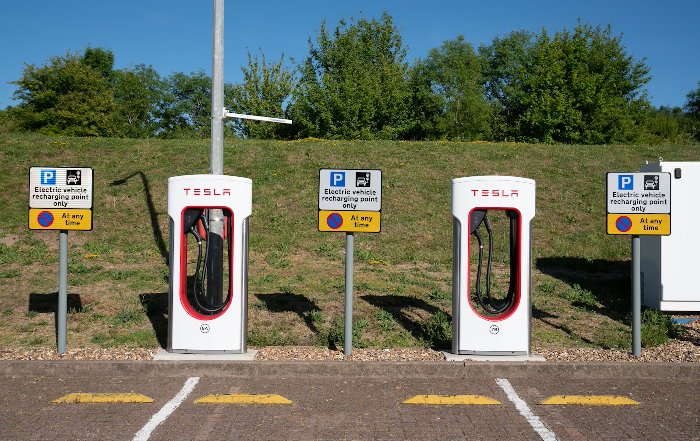
The viability of mass-market EV adoption depends not only on vehicle technology and price but also on the availability, reliability, and affordability of charging infrastructure, which in turn is tightly coupled with electricity generation, grid capacity, and regulatory frameworks. In leading markets such as Norway, Sweden, Netherlands, Germany, United States, China, and United Kingdom, public and private investment has accelerated the deployment of fast-charging networks along highways and in urban centers, while workplace and home charging remain critical for daily use.
Energy agencies and grid operators, including those documented by the International Energy Agency and national regulators, are increasingly focused on the implications of EV charging for peak demand, grid stability, and renewable energy integration. Smart charging, vehicle-to-grid (V2G) technologies, and dynamic pricing models are being tested and scaled to align charging behavior with periods of abundant renewable generation from wind and solar. This integration of mobility and energy systems creates new business models for utilities, charging network operators, and technology companies, and is a recurring theme in research from organizations such as the Rocky Mountain Institute.
For businesses and investors, the charging ecosystem represents both an opportunity and a coordination challenge. Decisions about where to deploy capital, how to structure tariffs, and how to manage interoperability and payment systems are shaping the competitive landscape for charging providers and influencing consumer confidence in EVs. Business-fact.com's focus on innovation and sustainable business practices allows its audience to follow how infrastructure strategies intersect with broader decarbonization efforts in cities and regions worldwide.
Competitive Dynamics, New Entrants, and Cross-Industry Convergence
The EV transition has lowered some traditional barriers to entry in the automotive sector, particularly those related to engine technology, while raising new barriers in software, electronics, and branding. This shift has enabled the rise of new players from China, United States, and Europe, as well as technology-led entrants from adjacent sectors. Companies such as BYD, NIO, XPeng, Rivian, Lucid Group, and others have sought to differentiate themselves through design, user experience, and direct-to-consumer sales models, challenging incumbents in segments ranging from premium SUVs to commercial vehicles.
At the same time, technology companies and mobility platforms such as Apple, Alphabet's Waymo, Uber, Lyft, and various ride-hailing and car-sharing providers in Asia and Europe are exploring how EVs can be integrated into broader ecosystems of on-demand mobility, subscription services, and autonomous driving. This convergence blurs the lines between automotive, technology, and energy sectors, creating partnership opportunities and competitive tensions that are closely followed by analysts and corporate strategists. Resources such as McKinsey & Company's automotive insights provide additional perspectives on how these dynamics are unfolding across regions.
For traditional automakers, the emergence of these new competitors underscores the importance of brand strength, dealer networks, manufacturing scale, and access to capital, while also highlighting the need to adapt organizational cultures and operating models. Many incumbents are forming joint ventures, alliances, and strategic partnerships with technology firms, battery producers, and mobility platforms to share risk, accelerate innovation, and expand market reach. These collaborations often feature prominently in the business press and in the business strategy coverage provided by business-fact.com.
Financing Models, Banking, and the Role of Crypto and Digital Assets
The transition to electric vehicles is influencing not only industrial strategy but also financial products and services across banking, insurance, and capital markets. Banks and leasing companies are developing new financing models that account for the different depreciation profiles, maintenance costs, and residual value uncertainties of EVs compared to internal combustion vehicles. Green loans, sustainability-linked bonds, and asset-backed securities tied to EV portfolios are becoming more common, reflecting investor appetite for climate-aligned assets and regulatory encouragement from bodies such as the European Central Bank and other central banks.
The insurance industry is also adapting, as EVs present distinct risk profiles in terms of repair costs, battery replacement, and cybersecurity vulnerabilities. Data from connected vehicles enables more granular risk assessment and usage-based insurance products, while raising questions about data ownership, privacy, and competition. For readers interested in the intersection of finance and mobility, Business-Fact's banking coverage and its analysis of crypto and digital asset trends provide a broader context for how financial innovation is responding to technological change.
In parallel, some mobility and energy projects related to EV charging and renewable integration are experimenting with blockchain-based platforms and digital tokens to manage microtransactions, grid services, and peer-to-peer energy trading. While these applications remain at an early stage and are subject to regulatory scrutiny, they illustrate how the EV transition can intersect with broader digital transformation trends that extend beyond the automotive sector, particularly in regions such as Europe, Asia, and North America where both EV adoption and digital finance ecosystems are relatively advanced.
Marketing, Consumer Behavior, and Brand Positioning
As EVs move from early adopters to the mass market in countries such as the United States, United Kingdom, Germany, China, Norway, and Netherlands, marketing strategies and consumer education campaigns are becoming critical differentiators. Automakers and dealers must address persistent misconceptions about range, charging availability, battery longevity, and resale value, while highlighting total cost of ownership advantages, performance benefits, and environmental credentials. Digital channels, influencer partnerships, and experiential marketing events are increasingly used to demystify EV ownership and to build brand loyalty.
The role of sustainability in purchasing decisions is particularly pronounced among younger consumers and in urban markets, where environmental awareness and access to charging are higher. Companies that can credibly articulate their decarbonization strategies, circular economy initiatives, and commitments to ethical sourcing may gain a reputational edge, especially as ESG-conscious investors and consumers scrutinize corporate claims. For professionals focused on brand strategy and customer engagement, Business-Fact's marketing insights and its broader technology coverage offer perspectives on how digital storytelling, data analytics, and personalization are reshaping automotive marketing.
Regional differences remain significant, however. In South Africa, Brazil, Malaysia, Thailand, and parts of Africa and South America, issues such as charging infrastructure, electricity reliability, and upfront affordability play a larger role in shaping consumer behavior, leading some markets to favor hybrid solutions or two- and three-wheeler electrification as intermediate steps. Global brands must therefore tailor their messaging and product portfolios to local conditions, balancing global platform efficiencies with regional customization.
Strategic Outlook to 2030 and Implications for Business-Fact Readers
Looking toward 2030, most credible scenarios from organizations such as the International Energy Agency and the International Transport Forum anticipate that electric vehicles will account for a substantial share of new light-duty vehicle sales in major markets, with particularly high penetration in Europe, China, and parts of North America and Asia-Pacific. The pace and distribution of this transition will depend on factors including battery cost trajectories, grid decarbonization, policy stability, and consumer acceptance, as well as the ability of automakers and suppliers to manage capital intensity and technological risk.
For the audience of business-fact.com, the automotive industry's transition to EVs should be viewed as a multi-dimensional strategic theme that intersects with key areas of interest across business and corporate strategy, technology and innovation, investment and capital markets, employment and skills, and sustainable development. Executives and investors who monitor these intersections will be better positioned to anticipate shifts in competitive advantage, to identify cross-sector opportunities, and to manage the risks associated with regulatory change, supply chain volatility, and technological disruption.
The EV transition is no longer a speculative future but a present reality that is reshaping industrial policy in Europe, Asia, and North America, influencing urban planning in cities from New York and London to Shanghai, Berlin, Toronto, and Sydney, and redefining what consumers expect from mobility. Platforms like business-fact.com, with their focus on global business dynamics and data-driven analysis, will continue to play a critical role in helping decision-makers navigate this complex landscape, interpret emerging signals, and translate them into informed strategies for growth, resilience, and long-term value creation.