

Understanding Enterprise Resource Planning Benefits
ERP as the Digital Backbone of Modern Business
Enterprise resource planning has evolved from a back-office accounting tool into the digital backbone of globally competitive organizations. For the happy readers of business-fact, who follow new developments in business, stock markets, employment, founders, the economy, banking, investment, technology, artificial intelligence and innovation, ERP now sits at the intersection of all these domains, shaping how companies operate, scale and create value in an increasingly data-driven world.
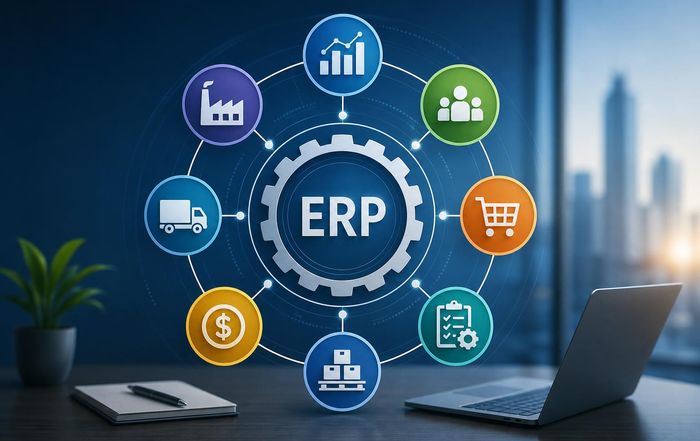
Modern ERP systems integrate finance, supply chain, manufacturing, sales, human resources and customer operations into a single, coherent platform, enabling leadership teams to run their organizations with a level of visibility and control that was not possible a decade ago. As global markets become more volatile, regulatory expectations rise and digital competition intensifies across the United States, Europe, Asia and beyond, the benefits of ERP are no longer optional efficiencies; they are strategic capabilities that determine which enterprises lead and which fall behind.
For organizations reviewing their digital strategies in 2026, understanding the full spectrum of ERP benefits is essential to making informed decisions about technology investments, talent, operating models and governance. The editorial perspective of business-fact.com emphasizes not only the functional advantages of ERP, but also how these systems reinforce experience, expertise, authoritativeness and trustworthiness in the eyes of customers, investors, regulators and employees.
Strategic Integration Across the Enterprise
The primary benefit of ERP lies in its ability to integrate core processes across the entire enterprise, replacing fragmented applications and spreadsheets with a unified, standardized system of record. In practice, this means that financial postings, inventory movements, production orders, purchase commitments, customer invoices and payroll runs are all captured and reconciled in real time, using a consistent data model and shared business rules. This level of integration is particularly critical for multinational companies operating across North America, Europe and Asia, where complexity in currencies, tax regimes, logistics networks and regulatory frameworks can quickly overwhelm siloed systems.
Global leaders such as SAP, Oracle, Microsoft and Infor have continued to invest heavily in cloud-based ERP platforms, offering modular capabilities that span finance, supply chain, human capital management and customer engagement. Learn more about how integrated digital platforms are redefining enterprise operations at Microsoft Cloud. These platforms give boards and executive teams a single version of the truth for performance management, enabling faster and more reliable decision-making across business units and geographies. For growth companies and founders scaling from regional to global operations, ERP integration becomes a key enabler of consistent processes, governance and reporting, which in turn supports investor confidence and valuation.
The editorial focus of business-fact.com on core business fundamentals aligns closely with this integrated view of the enterprise, as ERP serves as the underlying infrastructure that makes disciplined execution and transparent management possible.
Financial Discipline, Compliance and Investor Confidence
In capital markets where transparency and accountability are central to valuation, ERP delivers substantial benefits by strengthening financial discipline and compliance. Modern finance modules automate general ledger, accounts payable, accounts receivable, asset accounting, revenue recognition and consolidation, ensuring that transactions are posted accurately and consistently across entities and jurisdictions. This is increasingly important for companies listed on major stock exchanges in the United States, United Kingdom, Germany and other financial centers, where regulators and investors expect timely, high-quality financial reporting.
Organizations rely on ERP to support compliance with frameworks such as IFRS and US GAAP, as well as sector-specific requirements in banking, insurance, healthcare and public services. The International Accounting Standards Board explains how evolving standards affect global reporting; learn more at the IFRS Foundation. Automated controls, segregation of duties, audit trails and embedded approval workflows within ERP systems reduce the risk of fraud, misstatement and non-compliance, which can otherwise lead to reputational damage and regulatory penalties.
From an investment perspective, robust ERP environments contribute directly to the reliability of earnings guidance, cash flow projections and risk disclosures that analysts and institutional investors use to assess company performance. Readers following stock market developments on business-fact.com will recognize that organizations with mature ERP capabilities often demonstrate more predictable margins, better working capital management and stronger governance, all of which influence market valuations and access to capital.
Operational Efficiency and Cost Optimization
Beyond financial control, ERP systems deliver tangible benefits in operational efficiency and cost optimization across industries such as manufacturing, retail, logistics, healthcare and professional services. By standardizing processes and eliminating redundant manual work, organizations can reduce cycle times, minimize errors and lower operating expenses. In supply chain and manufacturing, integrated ERP enables synchronized planning of demand, production and procurement, reducing stockouts, excess inventory and expedited freight costs.
Leading manufacturers in Germany, Japan, South Korea and the United States use ERP to implement lean production, just-in-time replenishment and advanced planning techniques. The World Economic Forum highlights how digital operations are reshaping global value chains; further insights can be found at the World Economic Forum's platform on advanced manufacturing. By consolidating purchasing volumes across business units within ERP, companies can negotiate better terms with suppliers, while automated three-way matching and invoice processing reduce administrative overhead in accounts payable.
For service-oriented businesses, ERP supports efficient project accounting, resource scheduling and time and expense management, improving utilization and profitability. The cumulative effect of these efficiencies often translates into several percentage points of margin improvement, which can be decisive in competitive markets. In an environment where inflation, energy prices and supply disruptions create pressure on cost structures, ERP-enabled process optimization becomes a strategic lever for resilience and profitability.
Workforce Productivity and the Future of Employment
ERP has a direct impact on employment and workforce dynamics, both by automating routine tasks and by enabling employees to focus on higher-value work. Human capital management modules integrate recruitment, onboarding, payroll, performance management, learning and workforce analytics into a single framework, providing HR leaders with comprehensive insights into talent availability, skills gaps and engagement levels. Organizations across North America, Europe and Asia increasingly use ERP data to inform workforce planning, hybrid work policies and upskilling initiatives.
The International Labour Organization offers extensive analysis on the future of work and digital transformation; learn more at the ILO's future of work portal. While automation within ERP can reduce the need for certain transactional roles, it also creates demand for new capabilities in data analysis, process design, system configuration and change management. For readers following employment trends on business-fact.com, ERP implementation projects often serve as catalysts for organizational redesign, redefining roles and responsibilities across finance, operations, procurement and HR.
User-friendly interfaces, embedded analytics and mobile access have made ERP more accessible to line managers and frontline employees, reducing dependence on centralized back-office teams. This democratization of data empowers employees to make informed decisions in real time, from approving purchase orders to adjusting production schedules or responding to customer issues. In markets where talent scarcity and demographic shifts are pressing concerns, particularly in Europe and parts of Asia, ERP-driven productivity gains help organizations maintain competitiveness despite labor constraints.
Data, Analytics and Real-Time Decision Intelligence
One of the most significant developments in ERP since 2020 has been the deep integration of analytics and real-time data processing. Modern platforms increasingly embed business intelligence, predictive analytics and machine learning capabilities directly into transactional workflows, allowing managers to move from retrospective reporting to proactive, data-driven decision-making. Dashboards and key performance indicators are no longer static monthly reports; they are live, role-based views that update as transactions occur across the enterprise.
Organizations combine ERP data with external market, customer and operational data to gain a 360-degree view of performance. The MIT Sloan School of Management has documented how data-driven organizations outperform peers; further reading is available through MIT Sloan Management Review. For executives tracking macroeconomic signals, sector indices and internal metrics, ERP serves as the central hub from which integrated analytics draw, supporting scenario planning, stress testing and capital allocation decisions.
On business-fact.com, coverage of the global economy often highlights the value of timely, accurate data in navigating volatility. ERP systems enhance this capability by providing granular visibility into revenue, margins, costs, inventory, cash and risk exposures, enabling organizations to respond quickly to shifts in demand, supply constraints, price changes or regulatory developments across regions from the United States and Canada to Singapore and Brazil. As artificial intelligence tools become more deeply embedded, ERP platforms increasingly offer prescriptive recommendations, suggesting optimal actions rather than merely presenting information.
Cloud ERP, Scalability and Global Reach
The shift from on-premise ERP to cloud-based solutions has transformed the economics and scalability of enterprise systems. Cloud ERP allows organizations to deploy standardized templates across multiple countries and business units, while still accommodating local regulatory and tax requirements. This is particularly valuable for fast-growing companies expanding into new markets in Asia, Africa and South America, where speed of deployment and the ability to scale without heavy infrastructure investments are critical.
Major cloud providers such as Amazon Web Services, Microsoft Azure and Google Cloud host ERP platforms that offer high availability, security and performance. Learn more about cloud security best practices at the National Institute of Standards and Technology. Subscription-based pricing models shift ERP from a capital expenditure to an operating expense, which can be attractive for founders and mid-market enterprises managing cash flow and investment priorities. At the same time, cloud ERP simplifies system maintenance, updates and innovation adoption, as vendors can roll out new features and regulatory updates centrally.
For readers interested in technology and digital transformation on business-fact.com, cloud ERP represents a foundational layer on which other digital capabilities-such as customer experience platforms, advanced analytics and industry-specific solutions-can be integrated. Global organizations benefit from consistent, centrally governed ERP instances that still allow for regional configurations in the United States, Europe or Asia-Pacific, balancing standardization with local responsiveness.
ERP, Banking Integration and Financial Ecosystems
ERP systems increasingly form part of a broader financial ecosystem that includes banks, payment providers, treasury platforms and capital markets infrastructure. Direct integration between ERP and banking systems enables automated cash management, real-time bank reconciliation, payment initiation and liquidity forecasting, reducing manual intervention and improving visibility over global cash positions. This is particularly important for multinational corporations managing multi-currency operations and complex funding structures.
The Bank for International Settlements provides insights into the evolution of payment systems and financial market infrastructures; further information is available at the BIS website. By connecting ERP to banking APIs, organizations can streamline processes such as supplier payments, payroll, collections and intercompany settlements, while enhancing security and compliance with anti-money-laundering and sanctions screening requirements. Treasury modules within ERP or integrated specialist solutions support sophisticated risk management for foreign exchange, interest rates and commodities, essential for companies exposed to global markets.
Readers following banking and finance coverage on business-fact.com will recognize that integrated ERP-banking architectures also facilitate better working capital optimization, as real-time visibility into receivables, payables and inventory allows finance teams to fine-tune payment terms, credit policies and inventory strategies. As digital currencies, instant payment schemes and open banking frameworks mature across regions such as the European Union, United Kingdom, Singapore and Brazil, ERP's role as the orchestrator of financial flows within the enterprise becomes even more central.
Artificial Intelligence and Intelligent ERP
By 2026, artificial intelligence is no longer an experimental add-on to ERP but an embedded capability that enhances automation, forecasting and decision support across the enterprise. Intelligent ERP systems use machine learning to detect anomalies in transactions, recommend corrective actions, optimize inventory levels, predict maintenance needs for equipment and personalize user interfaces based on behavior. This convergence of ERP and AI aligns with the editorial priorities of business-fact.com in covering artificial intelligence as a transformative force in business operations.
Organizations deploy AI-enabled chatbots and digital assistants integrated with ERP to support employees in tasks such as querying financial results, checking order status, initiating workflows or retrieving policy information. The OECD has published guidelines and research on trustworthy AI in business; learn more at the OECD AI Policy Observatory. In finance, AI models embedded in ERP help improve forecasting accuracy for revenue, costs and cash flows by analyzing historical patterns, seasonality and external indicators. In supply chain, predictive algorithms anticipate demand fluctuations and supply disruptions, enabling proactive adjustments to procurement and production plans.
This intelligent layer enhances the value of ERP by moving beyond process standardization to continuous optimization, where the system learns and improves over time. For founders and executives seeking competitive advantage in sectors ranging from retail and manufacturing to healthcare and logistics across North America, Europe and Asia, intelligent ERP becomes a strategic asset that amplifies human expertise and institutional knowledge.
Innovation, Ecosystems and Industry-Specific Solutions
ERP benefits are no longer limited to generic back-office functions; modern platforms support industry-specific innovations that reflect the unique requirements of sectors such as automotive, pharmaceuticals, financial services, energy, public sector and professional services. Vendors and partners build specialized modules, extensions and microservices that integrate with core ERP, creating rich ecosystems of functionality tailored to particular value chains and regulatory environments.
The Gartner research organization has documented the rise of composable ERP and industry clouds; readers can explore these concepts further at Gartner's technology insights. For example, manufacturers in Germany, Italy and Japan use ERP integrated with manufacturing execution systems and industrial IoT platforms to support smart factory initiatives, while retailers in the United States, United Kingdom and Australia connect ERP to e-commerce, point-of-sale and customer engagement platforms to deliver omnichannel experiences.
On business-fact.com's innovation section, the role of ERP as a foundation for experimentation and new business models is increasingly visible. Subscription-based services, outcome-based contracts, servitization in manufacturing and digital marketplaces all rely on ERP's ability to support complex pricing, billing, revenue recognition and partner management. By providing a stable, governed core, ERP allows organizations to innovate at the edge while maintaining control over financial integrity and operational risk.
Sustainability, ESG and Trustworthy Reporting
Sustainability and environmental, social and governance (ESG) reporting have become central to corporate strategy, regulatory compliance and investor expectations in regions including the European Union, United States, United Kingdom and Asia-Pacific. ERP systems now play a critical role in capturing, consolidating and reporting ESG-related data, from carbon emissions and energy consumption to labor practices and supply chain ethics. The World Resources Institute offers widely used frameworks for greenhouse gas accounting; further details can be found at the WRI's GHG Protocol.
Organizations integrate ESG metrics into ERP alongside financial and operational data, enabling unified reporting and analysis. This integration supports compliance with emerging regulations such as the EU's Corporate Sustainability Reporting Directive and various national disclosure requirements, as well as voluntary frameworks like the Task Force on Climate-related Financial Disclosures. Learn more about climate-related financial disclosure at the TCFD knowledge hub. For investors and stakeholders, ERP-enabled ESG reporting enhances trustworthiness by ensuring that sustainability data is governed with the same rigor as financial data.
Readers and email members of business-fact.com's sustainable business coverage will recognize that ERP-driven transparency also helps companies identify opportunities to reduce waste, optimize resource usage and redesign products and processes for lower environmental impact. By embedding sustainability metrics into core planning, budgeting and performance management processes, ERP turns ESG from a standalone reporting exercise into an integral part of strategic and operational decision-making.
ERP, Founders and the Scaling Journey
While ERP has traditionally been associated with large enterprises, founders and high-growth companies increasingly adopt ERP earlier in their scaling journey to avoid the pitfalls of fragmented systems. As startups in technology, manufacturing, fintech and other sectors expand from local to global markets in North America, Europe and Asia, they face rising complexity in finance, compliance, supply chain and human resources that outgrows basic accounting and operational tools. Implementing ERP at the right stage allows founders to institutionalize processes, establish governance and build the data foundation required for sustained growth.
The Kauffman Foundation and similar organizations have documented how operational discipline supports startup scaling; more insights can be found through the Ewing Marion Kauffman Foundation. On business-fact.com's founders section, case studies increasingly highlight how early ERP adoption enables smoother fundraising, due diligence, international expansion and eventual IPO or acquisition processes, as investors place a premium on reliable data and scalable systems.
For founders in emerging markets across Africa, South America and Southeast Asia, cloud ERP lowers barriers to accessing world-class enterprise systems without the need for heavy upfront infrastructure spending. This democratization of ERP capabilities contributes to leveling the playing field between established incumbents and agile challengers, while still requiring strong leadership commitment to process design, change management and data governance.
Positioning ERP at the Center of Business Strategy
In 2026, understanding the benefits of enterprise resource planning is not merely a technical consideration; it is a strategic imperative for boards, executives, founders and investors operating in increasingly interconnected and regulated global markets. ERP systems provide the integrated data, standardized processes, financial control, operational efficiency, workforce productivity, AI-enabled intelligence and ESG transparency that underpin resilient, trustworthy and innovative organizations.
For the daily audience of business-fact.com, which spans interests from core business strategy and investment decisions to technology and artificial intelligence and global economic developments, ERP should be viewed as a foundational asset that connects these domains into a coherent, governable whole. As competitive pressure intensifies across the United States, Europe, Asia and other regions, enterprises that treat ERP as a living, evolving platform-rather than a static back-office system-will be better positioned to adapt, innovate and earn the trust of customers, employees, regulators and capital markets.
By aligning ERP strategy with broader business objectives, governance frameworks and cultural values, organizations can fully realize the benefits of enterprise resource planning, creating a digital backbone that supports sustainable growth, operational excellence and long-term value creation in an increasingly complex and data-driven global economy.