

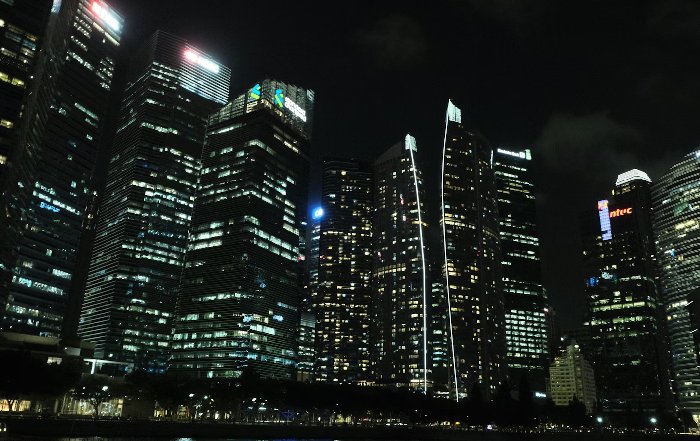
Why Singapore Remains a Key Hub for Global Finance
Singapore's Strategic Position in the Financial Landscape
Singapore stands as one of the most resilient and strategically positioned financial centres in the world, serving as a critical bridge between mature Western markets and the rapidly evolving economies of Asia. For readers of business-fact.com, which closely tracks developments in global business and finance, the city-state's trajectory offers a revealing case study in how a small, open economy can leverage regulatory sophistication, technological innovation, and geopolitical neutrality to maintain outsized influence in global finance. While other financial hubs such as New York, London, Hong Kong, and Tokyo continue to play defining roles, Singapore's combination of political stability, rule-of-law credibility, and pro-business policy has enabled it to sustain and even expand its relevance amid shifting capital flows, supply chain realignments, and digital transformation across the financial sector.
Positioned at the crossroads of major trade routes and time zones, Singapore operates as a natural connector between North America, Europe, and the Asia-Pacific region, allowing financial institutions to provide near 24-hour coverage to clients worldwide. The city's integration into global trade networks, underpinned by extensive free trade agreements and a commitment to open markets, aligns closely with the interests of multinational corporations seeking predictable regulatory environments and efficient access to both developed and emerging markets. For decision-makers monitoring macroeconomic trends and capital markets, Singapore's role as a coordinating node in cross-border finance, trade financing, and treasury operations continues to be central to regional and global financial architecture.
Regulatory Excellence and the Role of the Monetary Authority of Singapore
A defining factor in Singapore's continued prominence has been the regulatory framework shaped by the Monetary Authority of Singapore (MAS), which combines the functions of a central bank and integrated financial regulator. MAS is widely regarded as one of the most forward-looking and credible regulatory bodies globally, balancing prudential oversight with a strong emphasis on innovation and competitiveness. Its approach to supervision, risk management, and market development has helped attract global banks, asset managers, insurers, and fintech firms that value regulatory clarity and consistency. Readers can explore MAS's policies and initiatives directly on the official MAS website, which outlines its risk-based supervision models, technology sandboxes, and sustainable finance frameworks.
Unlike jurisdictions where regulatory fragmentation or political volatility can undermine long-term planning, Singapore's regulatory environment is characterized by coherence and continuity, enabling institutions to develop multi-year strategies in areas such as digital banking, wealth management, and capital markets. MAS's measured approach to issues such as capital adequacy, liquidity coverage, and stress testing aligns closely with global standards set by bodies like the Bank for International Settlements, whose work on prudential regulation and financial stability informs best practices worldwide. This alignment has given global investors and multinational corporations confidence that Singapore's financial system is both robust and internationally compatible, a crucial factor in an era of heightened systemic risk and regulatory scrutiny.
Banking Strength and Regional Treasury Functions
The strength of Singapore's banking sector remains one of the most visible pillars of its financial hub status. Homegrown institutions such as DBS Bank, OCBC Bank, and United Overseas Bank (UOB) have grown into regional champions, combining strong balance sheets with extensive networks across Southeast Asia, Greater China, and beyond. At the same time, virtually every major global banking group maintains significant operations in Singapore, using the city as a base for regional corporate banking, trade finance, transaction services, and wealth management. For readers following developments in banking and financial services, Singapore's model illustrates how a jurisdiction can host both powerful domestic banks and a dense ecosystem of international players without compromising systemic resilience.
Singapore's appeal as a regional treasury and cash management hub has only increased as multinational corporations recalibrate their supply chains and operating structures in response to geopolitical shifts and post-pandemic adjustments. The city's sophisticated payment infrastructure, adherence to international standards on anti-money laundering and counter-terrorism financing, and deep pool of multilingual financial professionals make it an ideal location for centralizing liquidity, managing currency exposures, and coordinating cross-border payments. International organizations such as the International Monetary Fund provide regular assessments of Singapore's macro-financial conditions, and their country reports highlight the stability and openness that underpin the city's attractiveness for corporate treasury operations.
Capital Markets, Stock Exchanges, and Investment Flows
In capital markets, Singapore has carved out a distinctive role despite intense competition from larger exchanges in the United States, Europe, and North Asia. The Singapore Exchange (SGX) operates as a multi-asset platform, offering equities, fixed income, derivatives, and commodities, with a particular strength in derivatives linked to Asian benchmarks. While Singapore may not rival New York or London in sheer listing volume, its strategic focus on niche products, regional indices, and risk management instruments has proven valuable for global investors seeking efficient exposure to Asian growth. Market participants can obtain detailed information on listings, derivatives, and market data directly from SGX's official site, which showcases the breadth of products available.
The city's role in cross-border investment flows extends far beyond its own exchange. Singapore is a major domicile for funds, private equity vehicles, and family offices, providing tax-efficient structures, robust investor protections, and strong legal enforceability. As global investors diversify away from single-country concentration and seek exposure to Southeast Asia's rising middle class, Singapore's fund management ecosystem has expanded significantly, supported by regulatory initiatives such as the Variable Capital Company structure. For readers of business-fact.com who track investment strategies and asset allocation trends, Singapore serves as a barometer of how global capital is being intermediated into high-growth markets such as Indonesia, Vietnam, and India, while still anchored in a jurisdiction with advanced legal and governance standards.
Wealth Management, Family Offices, and Private Capital
One of the most dynamic segments of Singapore's financial industry over the past decade has been wealth management and the rise of single and multi-family offices. High-net-worth individuals and ultra-high-net-worth families from across Asia, Europe, and the Middle East increasingly view Singapore as a secure, well-governed base for managing global assets, succession planning, and philanthropy. The city's appeal is reinforced by its robust legal framework for trusts, foundations, and estate planning, as well as a growing ecosystem of private banks, independent asset managers, and specialist advisory firms. The World Bank's comparative assessments of governance and regulatory quality, accessible through its Worldwide Governance Indicators, highlight the institutional strengths that underpin this trust.
The growth of private capital, including private equity, venture capital, and private credit, has further entrenched Singapore's hub status. Global and regional fund managers use the city as a base for sourcing deals in technology, infrastructure, healthcare, and consumer sectors across Asia, while also attracting co-investments from sovereign wealth funds, pension funds, and large family offices. This concentration of sophisticated capital has created a reinforcing cycle of expertise, deal flow, and innovation, which business-fact.com regularly examines in its coverage of founders and entrepreneurial ecosystems. In this context, Singapore's financial hub role is not merely transactional; it is increasingly about shaping capital allocation decisions that influence the trajectory of entire industries and economies across the region.
Fintech, Digital Assets, and the Role of Artificial Intelligence
Singapore's commitment to innovation has been particularly visible in fintech and digital financial services, where the city has positioned itself as a controlled yet progressive testbed for new technologies. MAS's regulatory sandboxes and digital banking licenses have enabled both incumbents and start-ups to experiment with new models in payments, lending, insurtech, regtech, and wealthtech, under close supervisory oversight. Institutions and entrepreneurs looking to explore the intersection of technology and finance often see Singapore as a pragmatic environment where new ideas can be piloted at scale while maintaining compliance with global norms. International organizations such as the World Economic Forum have profiled Singapore's fintech ecosystem in their work on the future of financial and monetary systems, reinforcing its reputation as a global testbed.
In digital assets and blockchain-based finance, Singapore has adopted a nuanced stance, distinguishing between regulated digital payment tokens, security tokens, and speculative crypto activity. While MAS has tightened rules around retail access to speculative crypto trading, it has simultaneously encouraged institutional-grade infrastructure for tokenization, stablecoins, and distributed ledger applications in capital markets and trade finance. For readers interested in crypto and digital asset regulation, Singapore's experience offers a pragmatic model of how to harness innovation while mitigating consumer and systemic risks. Global technology leaders such as IBM and Microsoft have also been active in Singapore's financial sector, contributing to the development of cloud-based solutions, AI-driven analytics, and cybersecurity frameworks, which can be further explored through resources like IBM's financial services insights and Microsoft Cloud for Financial Services.
Artificial intelligence has become a core enabler of Singapore's financial services competitiveness, with banks, asset managers, and insurers deploying AI for risk modelling, fraud detection, personalized advisory, and operational efficiency. MAS has issued principles for the responsible use of AI and data analytics, emphasizing fairness, ethics, accountability, and transparency, which align with global debates on trustworthy AI led by organizations such as OECD, whose AI policy observatory tracks international best practices. For business-fact.com readers exploring artificial intelligence in business and finance, Singapore demonstrates how a small but sophisticated jurisdiction can embed AI into its financial ecosystem without losing sight of governance and consumer protection.
Human Capital, Talent, and Employment Dynamics
No financial centre can thrive without a deep and adaptable talent pool, and Singapore has invested heavily in education, professional training, and international talent attraction to sustain its competitive edge. The city's universities and polytechnics, together with professional bodies in accounting, law, and finance, have developed specialized programs that align with industry needs in areas such as risk management, quantitative finance, fintech, and sustainable finance. Global benchmarks such as the World Economic Forum's Global Competitiveness reports, accessible through its insights on skills and human capital, consistently highlight Singapore's strengths in education quality and workforce capabilities, which translate into strong employability and productivity in the financial sector.
At the same time, Singapore has had to navigate complex employment dynamics, balancing the need for foreign talent with domestic workforce aspirations and social cohesion. Policies on work passes, skills upgrading, and industry transformation maps in financial services are designed to ensure that local professionals can access high-value roles while foreign experts bring in global experience and specialized capabilities. For professionals and employers following employment trends and labour market developments, Singapore's approach offers an instructive example of how a global hub can remain open and competitive while managing political and social sensitivities around immigration, inequality, and job displacement in an era of automation and AI.
Sustainable Finance and the Green Transition
Sustainable finance has emerged as a strategic priority for Singapore, reflecting both global imperatives and regional needs. As climate risks intensify and investors increasingly integrate environmental, social, and governance (ESG) considerations into their decision-making, Singapore aims to position itself as Asia's leading centre for green and transition finance. MAS has launched taxonomies, grant schemes, and disclosure initiatives to support green bonds, sustainability-linked loans, and transition financing, while encouraging robust climate risk management practices among financial institutions. For deeper context on sustainable finance frameworks, readers can refer to the Network for Greening the Financial System, whose publications outline how central banks and supervisors globally are integrating climate considerations into financial oversight.
Singapore's sustainable finance ambitions align with broader efforts to establish the city as a hub for carbon services, climate data, and green technology investment, complementing its role in commodity trading and maritime finance. Global initiatives such as the United Nations Principles for Responsible Investment (UN PRI), detailed on the PRI website, and the Task Force on Climate-related Financial Disclosures (TCFD), whose recommendations shape corporate reporting standards worldwide, provide the frameworks within which Singapore-based firms are increasingly operating. For business-fact.com readers tracking sustainable business strategies and ESG integration, Singapore's policies and market developments signal how financial centres can catalyse capital flows into low-carbon and resilient infrastructure across Asia, from renewable energy projects in Southeast Asia to sustainable urban development in China and India.
Geopolitics, Neutrality, and Global Connectivity
In an era marked by geopolitical rivalry, trade fragmentation, and shifting alliances, Singapore's neutral and pragmatic foreign policy has become an important intangible asset for its financial sector. The city-state maintains strong relationships with major powers including the United States, China, and the European Union, while actively participating in regional forums such as ASEAN and global institutions like the World Trade Organization, whose resources on trade and finance underscore the importance of open, rules-based systems. This diplomatic positioning gives global firms confidence that Singapore will remain a predictable and stable base for operations, even as tensions rise in other parts of the world.
Singapore's extensive network of free trade agreements and investment treaties, along with its role in multilateral frameworks such as the Regional Comprehensive Economic Partnership (RCEP), enhances its attractiveness as a hub for cross-border financial and commercial activity. For corporates and investors who rely on business-fact.com to monitor global business developments and market news, Singapore's connectivity means that decisions made in the city's boardrooms and trading floors often have implications that extend across Asia, Europe, North America, and emerging markets in Africa and South America. In this sense, Singapore functions not only as a regional hub but as an integral node in the global financial system, translating geopolitical complexity into actionable strategies for capital allocation, risk management, and market entry.
Innovation Culture and the Broader Business Ecosystem
Beyond regulation and market structure, Singapore's enduring strength as a financial hub is deeply connected to its broader business and innovation ecosystem. The city has cultivated a dense network of technology firms, research institutions, and start-up accelerators, supported by agencies such as Enterprise Singapore and EDB Singapore, whose initiatives and support programs can be explored via EDB's official site. This ecosystem encourages collaboration between financial institutions, technology companies, and academia, leading to new solutions in areas such as digital identity, cross-border payments, cybersecurity, and regtech. For readers of business-fact.com with a focus on innovation and emerging business models, Singapore offers a living laboratory where financial services intersect with deep tech, advanced analytics, and platform economies.
The city's role as a regional headquarters location for multinational corporations across sectors-from technology and pharmaceuticals to logistics and consumer goods-reinforces its financial hub status by generating demand for corporate banking, capital raising, risk management, and advisory services. Singapore's ranking in global competitiveness and ease-of-doing-business studies, including those published by organizations like the World Bank and World Economic Forum, reflects the quality of its infrastructure, legal system, and digital connectivity. For business leaders evaluating where to base regional operations or launch new ventures, resources such as Singapore's official business portal provide practical guidance on incentives, regulations, and ecosystem partners, complementing the analytical perspectives available on business-fact.com's business strategy pages.
Outlook: Singapore's Role in the Next Phase of Global Finance
As global finance navigates the remainder of the 2020s, characterized by higher interest rates than the previous decade, ongoing inflation pressures, rapid technological change, and intensifying climate risks, Singapore's position as a key hub appears secure yet far from static. The city faces competition from established centres like Hong Kong, Tokyo, Shanghai, New York, and London, as well as from emerging hubs in the Middle East and other parts of Asia. However, its combination of regulatory excellence, technological sophistication, human capital depth, and geopolitical neutrality gives it a distinctive value proposition that resonates with global financial institutions, investors, and corporates seeking stability amid uncertainty.
For the audience of business-fact.com, which spans interests from stock markets and macroeconomics to technology, AI, and sustainable finance, Singapore will remain a critical reference point in understanding how global capital is intermediated, how innovation is governed, and how financial centres adapt to structural shifts. Whether the focus is on digital asset regulation, AI-driven risk management, green bond issuance, or cross-border treasury optimization, developments in Singapore often prefigure broader trends that later shape practices in other jurisdictions. As such, continued close observation of Singapore's policies, market dynamics, and institutional strategies will be essential for investors, executives, policymakers, and entrepreneurs who wish to anticipate the next phase of global financial evolution and position themselves effectively within it.